
If you’ve sprayed those tiny black ants marching across your Bellevue kitchen counter and woken up the next day to see EVEN MORE ants, you’re not losing your mind. You’re experiencing something entomologists call “colony budding” and it’s turning what could have been a manageable ant problem into a full-blown infestation spreading throughout your home.
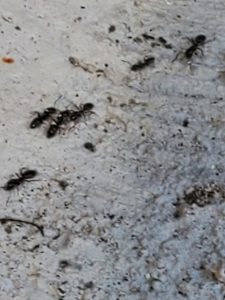
This phenomenon is happening right now across Bellevue, Redmond, Kirkland, and Sammamish. According to local pest control professionals handling 50 emergency ant calls per week this spring, approximately 90% of Eastside homeowners are making the exact same critical mistake with store bought ant sprays.
Here’s the uncomfortable truth: that $12 can of ant spray from Home Depot isn’t just failing to solve your problem it’s actively making it worse. And with the early warm weather we’ve experienced in late February 2026, combined with massive construction projects displacing ant colonies throughout downtown Bellevue and Redmond’s tech campus areas, this spring is shaping up to be one of the worst ant seasons the Eastside has ever seen.
Let me explain what’s actually happening inside your walls and why everything you’ve tried so far has failed.
The Science Behind Why Ant Spray Backfires (And Makes Your Problem Worse)
When you spray those tiny black ants with a repellent insecticide whether it’s Raid, Ortho Home Defense, or any other store-bought product you’re not eliminating the colony. You’re triggering a survival mechanism that causes it to multiply.
Here’s what happens at the colony level:
Understanding Colony Budding in Odorous House Ants
Odorous house ants the species responsible for approximately 75% of ant problems on the Eastside have evolved a remarkable defense mechanism. When the colony senses danger (like the toxic chemicals in repellent sprays), queens respond by fragmenting the colony.
The colony budding process:
- Detection phase: Workers encounter the repellent chemical and return to the nest with alarm pheromones
- Emergency response: Queens sense the threat to the colony
- Fragmentation: One colony with 10,000 to 50,000 ants splits into 2 to 5 smaller satellite colonies
- Relocation: Each queen takes a portion of workers and larvae to establish a new nesting site
- Multiplication: Within weeks, you now have multiple independent colonies instead of one
Why this is devastating: That single colony in your wall just became 3 to 4 separate colonies. Instead of ants in your kitchen, you now have ants in your kitchen, bathroom, master bedroom, and upstairs office. The problem literally multiplied because you tried to kill them with spray.
According to Washington State University extension research on ant behavior: “Repellent insecticides can cause colony fragmentation in species with multiple queens. What appears to be effective treatment can result in increased ant activity as satellite colonies establish in new locations.”
This explains why so many Bellevue and Redmond homeowners report:
- “I sprayed the ants and the next week they showed up in a completely different room”
- “There are more ants now than before I started treating them”
- “They just keep moving to new areas of my house”
You weren’t imagining it. The spray literally caused the colony to split and spread throughout your home.
The 5 Second Identification Test: Do You Have Odorous House Ants?
Before we go further, you need to know if you’re dealing with odorous house ants – because this colony budding problem is specific to this species.
Here’s the fastest identification method used by professional exterminators:
The smell test (yes, really):
- Catch one ant with a piece of tape or tissue
- Crush it between your fingers
- Smell it
If it smells like rotten coconut, blue cheese, or fermenting fruit: You have odorous house ants. This distinctive odor is caused by chemicals they release when crushed.
If there’s no smell at all: You likely have little black ants or pavement ants – different species requiring different treatment approaches.
If the ants are noticeably larger (1/4 inch+): You may have carpenter ants, which is a more serious problem requiring immediate professional attention as they damage wood structures.
Why identification matters:
Different ant species require completely different treatment approaches. Using the wrong method like a repellent spray on odorous house ants doesn’t just fail, it makes the problem exponentially worse. This is why professional ant control services always begin with proper species identification.
Learn more about identifying sugar ants and little black sugar ants in Seattle.
Why the Eastside Is Experiencing Record Ant Infestations in 2026
If it seems like ant problems are worse this year on the Eastside, you’re not imagining it. Three converging factors are creating perfect conditions for ant invasions across Bellevue, Redmond, Kirkland, and Sammamish:
Factor #1: Unprecedented Construction Displacement
Downtown Bellevue’s massive redevelopment is displacing thousands of established ant colonies. When construction crews dig up ground for new high-rises, luxury condos, and mixed use developments, they’re destroying ant nests that have existed for years. Those displaced colonies need somewhere to go and nearby homes are convenient targets.
Redmond’s tech campus expansion – particularly around the Microsoft and Amazon facilities is having the same effect. Every excavation project forces ant colonies to relocate, and they’re moving into adjacent residential neighborhoods throughout Education Hill, Grass Lawn, and Overlake.
Light rail construction extending through Bellevue and Redmond continues to disrupt ground throughout the region, creating ongoing displacement of outdoor ant colonies.
Professional ant control services in Bellevue and ant control in Redmond are seeing 40% more calls compared to spring 2025, with the heaviest concentration in areas within 1/4 mile of major construction projects.
Factor #2: Early Spring Activation Due to Warm February
Late February 2026 saw consistently warmer temperatures than typical Pacific Northwest winters. While this is pleasant for humans, it’s causing ant colonies to activate 3 to 4 weeks earlier than normal.
Ant colonies become active when soil temperatures consistently reach 50°F. Normally in the Seattle area, this happens in mid to late March. This year, colonies became active in late February giving them an extended season to forage, breed, and invade homes.
What this means for homeowners: By the time you’re reading this in spring 2026, ant colonies have already had weeks of active foraging. They’ve established trails into your home, located food sources, and are in full expansion mode.
Factor #3: Aging Eastside Housing Stock
Many homes in Bellevue, Redmond, and Kirkland were built in the 1960s to 1980s. Decades of foundation settling, weathering, and minor earthquake activity have created countless entry points tiny cracks and gaps where utilities penetrate walls.
Common entry points in Eastside homes:
- Foundation cracks from settling (especially homes built on Bellevue’s clay soils)
- Gaps around old window frames
- Spaces where phone/cable/internet lines enter the house
- Worn weatherstripping on garage doors
- Cracks where concrete slabs meet foundation
- Gaps under sliding glass doors
Odorous house ants only need a gap the width of a credit card to enter your home. An average Eastside home built before 1990 typically has 15 to 30 potential entry points.
Combined, these three factors explain why ant problems on the Eastside seem worse than ever this spring.
The 5 DIY Methods That Make Your Ant Problem Worse
Let’s talk about what DOESN’T work and more importantly, why these popular DIY methods often make ant infestations worse.
Method #1: Repellent Ant Spray (The Worst Offender)
Products: Raid Ant & Roach Killer, Ortho Home Defense, Hot Shot, generic ant sprays
Why people use it: Immediate visible results you spray, ants die instantly, you feel accomplished.
Why it fails: As explained above, repellent sprays cause colony budding in odorous house ants. That single colony splits into multiple colonies, and within 2 to 3 weeks you have MORE ants in MORE locations.
Cost: $8-15 per bottle Result: Problem multiplies within 2 to 3 weeks
Method #2: Peppermint Oil (The Pinterest Favorite)
The claim: Natural deterrent that repels ants without chemicals
Why people use it: Feels safer, smells pleasant, heavily promoted on social media
Why it fails: University of California IPM research tested peppermint oil and found it “provides minimal repellency lasting less than 24 hours.” Ants may briefly avoid the scent, then simply walk through it once it disperses.
My Bellevue client experience: Homeowner spent $45 on organic peppermint essential oil, applied it daily for two weeks. Ants initially seemed bothered, then within days were walking directly through the oil like it wasn’t there. Kitchen smelled like a candy cane explosion for weeks. Ants remained.
Cost: $15 to 25 for quality essential oil Result: Temporary mild disruption, zero elimination
Method #3: Vinegar Spray (The “Natural” Solution)
The claim: Disrupts ant pheromone trails naturally
Why people use it: Inexpensive, non toxic, readily available
Why it fails: Vinegar does temporarily disrupt scent trails, but it doesn’t eliminate the colony. Ants simply establish a new trail within hours. You’re treating the symptom (the trail you see) not the problem (the colony in your wall).
Reality check: You’d need to spray vinegar every 2 to 3 hours, 24/7, to maintain disruption. This is neither practical nor effective.
Cost: $3 to 5 Result: Requires constant reapplication, never eliminates colony
Method #4: Terro Liquid Ant Baits (Wrong Bait for This Species)
Why people use it: Heavily marketed, available everywhere, has good reviews for some ant species
Why it fails for odorous house ants: Terro’s active ingredient (borax in a sugar solution) works excellently for certain ant species like pavement ants. However, odorous house ants often ignore it or show minimal interest because the formulation doesn’t match their feeding preferences.
What happens: You set out the bait traps, maybe see a few ants investigate them, but the main colony ignores them and continues foraging elsewhere. Professional-grade baits use different attractants and active ingredients specifically formulated for odorous house ants.
My Redmond client story: Set out 6 Terro bait stations throughout kitchen and pantry. A few ants investigated day one, then completely ignored them for the next two weeks. Meanwhile, ants continued trailing to the coffee maker and dishwasher area. Total waste of time and money.
Cost: $6 to 10 for 6 pack Result: Minimal interest, colony continues thriving
For effective baiting, you need professional ant exterminators who understand species specific treatments.
Method #5: Diatomaceous Earth (Stops Working When Wet)
The claim: Natural powder that kills ants by damaging their exoskeletons
Why people use it: Non toxic, ecofriendly, works on many insects
Why it fails in Washington: Diatomaceous earth (DE) DOES work but only when completely dry. The moment it gets even slightly damp, it becomes completely ineffective.
The Washington problem: We live in one of the dampest climates in the United States. Bellevue averages 37 inches of rainfall annually. Crawl spaces, basements, and anywhere ants actually nest stays perpetually slightly damp. DE applied indoors becomes ineffective within days due to ambient humidity.
What you’ll see: White powder all over your house (looks like you’re running an illegal operation), ants walking directly through it without dying, and zero long-term effectiveness.
Cost: $25 to 45 for food grade DE Result: Messy application, ineffective in damp Pacific Northwest climate
Understanding these common DIY ant control mistakes in Seattle can save you weeks of frustration and wasted money.
What ACTUALLY Works: Professional Treatment Timeline
Now let’s talk about what does work – and set realistic expectations for the timeline.
Professional odorous house ant elimination uses non repellent gel baits that ants cannot detect as poison. This is the critical difference from store bought products.
How professional treatment works:
The Non Repellent Bait Strategy
Professional exterminators use specialized gel baits containing active ingredients like:
- Indoxacarb
- Fipronil
- Thiamethoxam
These are transfer insecticides ants consume the bait, return to the colony, and through a process called trophallaxis (mouth to mouth feeding), they spread the poison to other workers, larvae, and queens. The poison is undetectable to the ants, so they enthusiastically consume it thinking it’s premium food.
Week-by-week timeline for Eastside homes:
Week 1: Increased Activity (Don’t Panic This Is Good)
What you’ll see: MORE ants than before treatment, especially around bait placements
Why this happens: The bait attracts foraging ants. Those ants return to the colony and recruit additional workers to the “premium food source.” This recruitment creates the appearance of increased activity.
Your reaction should be: Relief. This means the ants are finding and consuming the bait. It’s working.
Bellevue example: Homeowner in Crossroads area saw 50 ants during initial inspection. Day 3 after treatment, counted 150 ants in kitchen. Called in panic. Technician explained this is peak recruitment phase. By day 7, activity started declining.
Week 2: Noticeable Decline (40 to 60% Reduction)
What you’ll see: Significantly fewer ants, trails becoming less organized
Why this happens: The poison has cycled through a substantial portion of the colony. Workers who consumed bait are dying, and production of new workers has slowed as queens are affected.
Week 3: Occasional Stragglers (80 to 90% Reduction)
What you’ll see: Random individual ants, no organized trails, occasional scouts
Why this happens: Colony is collapsing. Remaining workers are disorganized without the pheromone network. Queens are dead or dying.
Week 4 to 6: Complete Elimination
What you’ll see: Zero to 1 to 2 random ants per week (just outdoor scouts, not from your colony)
Why this takes time: Large colonies can contain 50,000 to 200,000 ants. The poison needs time to transfer throughout this entire population. Unlike spraying visible ants, we’re eliminating the actual colony.
Success rate: 90 to 95% complete elimination for odorous house ants when treatment includes both baiting and exclusion work.
Learn more about professional emergency ant service in WA and emergency ant control in Seattle.
The Critical Component Most Treatments Miss: Exclusion
Here’s what separates temporary ant control from permanent elimination: exclusion work.
You can kill every single ant in your house, but if the 15 to 30 entry points remain open, new ant colonies will invade within weeks. This is why homeowners often report: “The treatment worked great for 2 months, then the ants came back.”
They came back because nothing prevented them from coming back.
What Professional Exclusion Includes
Comprehensive entry point sealing:
- Caulking foundation cracks
- Sealing gaps around utility penetrations (pipes, wires, cables)
- Installing or replacing door sweeps
- Weatherstripping doors and windows
- Screening vents with 1/4 inch hardware cloth
- Sealing gaps where concrete meets siding
For a typical Eastside home: 15 to 25 entry points requiring sealing
Materials used:
- Commercial-grade caulk (lasts 10+ years)
- Copper mesh (for larger gaps)
- Weatherstripping (EPDM rubber)
- Hardware cloth (galvanized steel)
Cost: $300 to 800 depending on number of entry points
ROI: Permanent prevention vs. repeated $300 to 500 treatments every few months
According to University of California IPM research: “Exclusion is the single most important component of successful ant management. Without it, elimination is temporary at best.”
For comprehensive solutions, see ant prevention tips for Seattle homes.
The Real Cost Comparison: DIY Disaster vs. Professional Solution
Let’s look at actual numbers from Eastside homeowners:
DIY Attempt (Typical Scenario)
Month 1:
- Ant spray (3 bottles): $36
- Terro baits: $10
- Peppermint oil: $22
- Subtotal: $68
- Result: Problem got worse (colony budding from spray)
Month 2:
- More ant spray: $12
- Vinegar (multiple bottles): $15
- Diatomaceous earth: $35
- Subtotal: $62
- Result: Ants in multiple rooms now
Month 3:
- Finally called professional: $350
- Total spent: $480
- Time wasted: 12 weeks of stress
- Result: Finally eliminated
Professional Treatment from Day 1
Week 1:
- Inspection and species identification: $0 to 150 (often waived)
- Professional treatment exclusion: $285 to 450
- Total cost: $285 to 450
- Timeline: 3 to 6 weeks to complete elimination
- Result: Permanent solution with warranty**
The math is clear: DIY attempts cost more when you factor in failed products plus eventual professional treatment anyway. Starting with professional treatment saves both money and 8 to 12 weeks of frustration.
See detailed pricing at How Much Does Ant Extermination Cost Seattle.
Prevention Strategies Specific to Eastside Homes
Once you’ve eliminated the current infestation, prevention is critical:
Moisture Control (Critical in Pacific Northwest)
Why moisture matters: Ants need water. Your home’s moisture issues attract and sustain colonies.
Eastside specific concerns:
- Crawl space moisture (extremely common in Bellevue, Redmond)
- Poor drainage around foundations (clay soils retain water)
- Leaky pipes under sinks (even slow drips)
- Condensation from HVAC systems
Prevention steps:
- Install vapor barriers in crawl spaces
- Repair all plumbing leaks immediately
- Improve yard drainage away from foundation
- Use dehumidifiers in basements
- Run exhaust fans during showers
Landscape Management
Common mistakes creating ant problems:
Mulch against the house: Wood mulch touching your foundation creates ideal ant nesting habitat. Ants nest in the mulch, then easily enter your home.
Solution: 12 inch mulch free zone around entire foundation
Overgrown vegetation: Shrubs and trees touching your house create bridges for ants to access upper floors.
Solution: Trim all vegetation 12 inches from siding
Firewood storage: Wood piles against the house attract carpenter ants and other wood-destroying insects.
Solution: Store firewood 20 feet from house, elevated off ground
Food Source Elimination
Why Eastside homes are targets:
- High-end kitchens with more appliances more nooks where crumbs accumulate
- Busy families dishes left overnight, spills not immediately cleaned
- Pet food bowls left out 24/7
- Compost bins attracting fruit flies (which attract ants)
Prevention checklist:
- ✓ Wipe counters thoroughly after every meal
- ✓ Sweep/vacuum floors daily
- ✓ Store all food in sealed containers (including pet food)
- ✓ Take garbage out daily
- ✓ Don’t leave dirty dishes overnight
- ✓ Clean behind appliances quarterly
- ✓ Fix any appliance leaks (especially dishwashers)
Learn more about signs of ant infestation in Seattle to catch problems early.
When to Call a Professional Immediately
Don’t wait if you’re experiencing:
Red Flag #1: Multiple Rooms Affected
If you’re seeing ants in your kitchen AND bathroom AND bedroom, you have an established colony with extensive foraging trails. DIY treatment at this stage will likely trigger colony budding, making the problem much worse.
Red Flag #2: Ants After You’ve Sprayed
If you used ant spray and now you’re seeing MORE ants or ants in NEW locations, you’ve caused colony budding. You need professional treatment immediately before more satellites establish.
Red Flag #3: Spring Peak Season (March to June)
During peak ant season on the Eastside, colonies are in maximum expansion mode. What starts as 20 ants can become 200 ants within two weeks. Early intervention prevents major infestations.
Red Flag #4: Large Ants or Sawdust
If you see ants 1/4 inch or larger, especially with piles of sawdust nearby, you likely have carpenter ants. These cause structural damage to your home and require immediate professional treatment.
Red Flag #5: Food Preparation Areas
Ants in kitchens, pantries, or anywhere food is prepared present health risks. Professional treatment ensures food-safe products and methods.
For immediate help, contact professional ant control services.
Serving the Eastside: Bellevue, Redmond, Kirkland, and Beyond
Professional odorous house ant elimination is available throughout King County, with particular expertise in Eastside communities experiencing the construction related displacement issues discussed above:
Primary service areas:
- Ant control in Bellevue, WA All neighborhoods including Downtown, Crossroads, Factoria, Bridle Trails, Somerset, West Bellevue
- Ant control in Redmond, WA Education Hill, Overlake, Grass Lawn, Downtown Redmond, Bear Creek
- Ant control in Kirkland Juanita, Totem Lake, Downtown Kirkland, Finn Hill
- Ant control in Sammamish Pine Lake, Klahanie, Sahalee
- Ant control in Renton, WA Highlands, Kennydale, Benson Hill
- Ant control in Kent, WA East Hill, West Hill, Midway
Also serving: Issaquah, Newcastle, Mercer Island, Woodinville, Bothell, and all King County communities.
Services available:
- Same day emergency response
- Species specific treatment plans
- Comprehensive exclusion work
- Satisfaction guarantees
- Free retreatments within warranty period
Frequently Asked Questions
How long until I see results after professional treatment?
Short answer: 3 to 6 weeks for complete elimination, with noticeable improvement by week 2.
Detailed timeline: Week 1 may show increased activity (bait recruitment), week 2 shows 40 to 60% reduction, week 3 shows 80 to 90% reduction, weeks 4 to 6 achieve complete elimination. This timeline varies by colony size and species.
Should I clean up the ants I see during treatment?
Yes, you can clean up dead or dying ants. However, don’t wipe down the bait placements or spray any chemicals near them let the treatment work.
Will the ants come back?
Not if exclusion work was completed. When entry points are sealed, ants cannot reenter. Without exclusion, new colonies can invade within months.
Is the treatment safe for pets and children?
Yes. Professional treatments use products registered by the EPA for indoor residential use. Bait placements are in areas inaccessible to pets and children (cracks, behind appliances, etc.).
What if I’m still seeing ants 3 weeks after treatment?
This can be normal if you had a large colony. However, you should see significant reduction (80%) by week 3. If activity hasn’t decreased at all, contact your service provider you may need additional treatment or have a separate colony.
Do you use ecofriendly or natural options?
Yes, low toxicity and reduced risk products are available upon request. However, these may require longer treatment timelines or additional applications.
Stop Making Your Ant Problem Worse
If you take away nothing else from this article, remember these critical points:
1. Store bought ant spray causes colony budding in odorous house ants – literally multiplying your problem instead of solving it.
2. Species identification matters the smell test tells you if you have odorous house ants (the species causing most Eastside problems).
3. This spring is worse than usual construction displacement and early warm weather are creating perfect conditions for ant invasions across Bellevue, Redmond, and Kirkland.
4. DIY methods cost more long term when you factor in failed products plus eventual professional treatment, starting with professional service saves money.
5. Exclusion is non negotiable without sealing entry points, any elimination is temporary.
The colony living in your walls contains 50,000 to 200,000 ants. Those 20 ants you see on your counter represent 0.01% of the actual problem. Treating what you can see while ignoring the colony is why DIY attempts fail.
Professional treatment addresses the entire colony using species specific methods, then prevents re-infestation through comprehensive exclusion. It’s the only approach that provides permanent results.
If you’re dealing with ants in your Eastside home this spring, don’t waste another week on Pinterest remedies that multiply your problem. Get professional species identification and treatment before those 20 ants become 200, and that single colony becomes four satellite colonies throughout your home.
The $285 to 450 you spend on professional treatment costs less than months of failed DIY attempts and actually solves the problem permanently.
Related Resources:
- Understanding ant season in Seattle
- Complete ant control guide
- Bellevue kitchen ant case study
- Little black ant removal strategies
We Serve All Seattle Neighborhoods & King County: From Downtown and Ballard to the Eastside in Bellevue and Redmond, and throughout South King County in Renton and Kent.
Call Now: (206) 571 7580
Same Day & Next Day Service Available | Free Inspections | Guaranteed Results