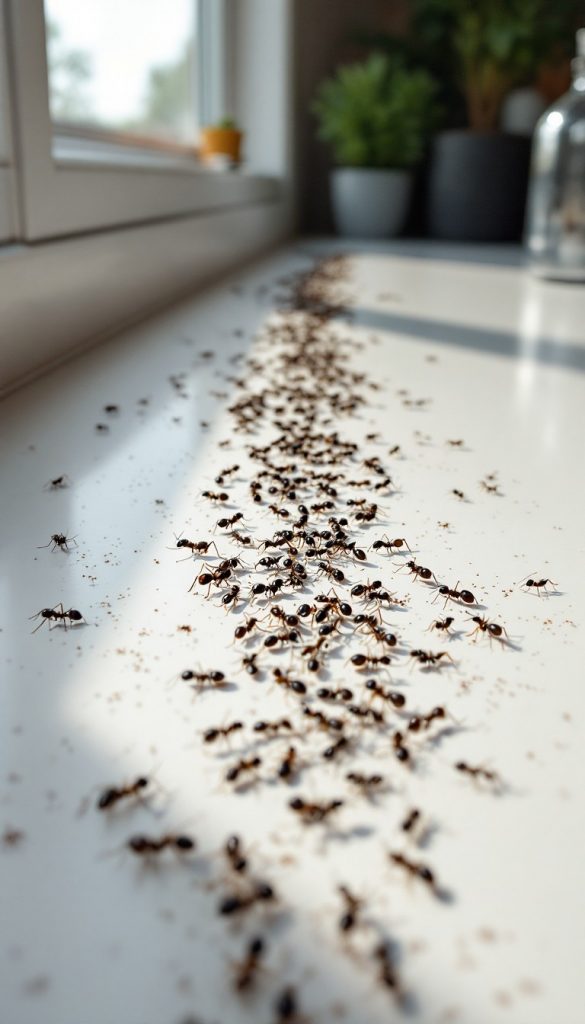
Found ants in your Seattle kitchen this morning and thinking about grabbing that spray can? Stop. What you’re about to do could multiply your ant problem by 5X and cost you thousands in structural repairs.
After eliminating thousands of ant infestations throughout Seattle and King County over 20 years, we’ve identified the exact mistakes homeowners make that transform manageable $200 problems into $5,000-8,000 disasters. This guide gives you the truth about Seattle ant control including what the internet gets dangerously wrong.
AMPM Exterminators specializes in species-specific ant elimination throughout Seattle, Bellevue, Kirkland, Redmond, and all King County communities.
Call (206) 571-7580 for same-day ant identification and elimination
Licensed ant control specialists | 20+ years King County | Guaranteed colony elimination | No contracts required
The $8,000 Mistake Seattle Homeowners Make Every Spring
The Story You Need to Hear:
Homeowner in Ballard sees 5-10 large black ants daily in kitchen. Googles “how to get rid of ants.” Every article says: “Seal entry points.”
Spends entire weekend caulking every crack. Ants disappear in 3 days. Feels like a genius.
Eight months later, cutting drywall to add outlet. Sawdust everywhere. Hundreds of ants inside wall. Turns out: carpenter ants. He trapped them INSIDE his walls.
Final damage: 6 wall studs destroyed, floor joists compromised, moisture problem he didn’t know existed (why ants were there).
Total cost: $8,000
What professional would have cost in April: $400
What went wrong: He followed generic “ant control” advice for a species that requires completely different treatment. The internet doesn’t differentiate between ant species. You seal entry points AFTER elimination, not before.
When you seal carpenter ants inside, they don’t leave they excavate deeper into your structure looking for exit routes. Months of unchecked tunneling = extensive damage.
This isn’t rare. We see 13-25 of these cases every month in Seattle. It’s why we’re writing this guide.
The 4 Ant Species Destroying Seattle Homes And Why One Treatment Doesn’t Work for All
Species #1: Odorous House Ants (90% of Seattle Infestations)
What you’re seeing: Tiny black ants (1-2mm, rice grain size) in organized trails to food
Also called: Little black ants, sugar ants, sweet ants (though “sugar ants” aren’t a real species)
The 100% Accurate Identification Test:
Crush one ant between your fingers. Smells like rotten coconut or blue cheese? That’s odorous house ant guaranteed. No other Seattle ant species produces this smell.
Why They’re Everywhere in Seattle:
Pacific Northwest climate creates perfect conditions:
150 rainy days leads to consistent moisture
Moderate temperatures year-round is no winter die off
Dense urban housing is unlimited nesting sites
Landscaping with bark mulch is ideal outdoor colonies
A single odorous house ant colony can contain 100,000 workers and dozens of queens. They nest outdoors (mulch, under rocks, in planter boxes, beneath patios) and send thousands of foragers indoors daily.
Where You’ll Find Them:
Kitchen hot spots (90%):
Trails along countertops to sugar bowl, honey jar, syrup
Inside cupboards targeting cereal boxes, cracker packages
Around pet food bowls (wet and dry)
Under sink near dishwasher drip pan
Behind refrigerator at drip tray
Bathroom locations (60%):
Baseboards leading to toothpaste residue
Around bathroom sink at soap buildup
Shower caulking gaps
Why Store Bought Spray Makes It Catastrophically Worse:
This is CRITICAL to understand:
When you spray odorous house ants with Raid, Home Defense, or any store-bought ant killer, here’s what actually happens:
Step 1: Worker ants detect repellent chemical (pyrethroids)
Step 2: They rush back to nest with danger warning pheromone
Step 3: Colony activates “budding” behavior an evolutionary survival mechanism
Step 4: One colony with one location splits into 3-5 separate colonies at different locations
Step 5: What was ants in kitchen becomes ants in kitchen , bathroom , bedroom , living room , basement
This is called colony fragmentation. You literally multiply your problem.
Timeline of DIY failure:
Day 1: Buy $12.99 Raid from Home Depot, spray visible ants, feel victorious
Day 3: Ants gone from kitchen (false success colony is budding)
Week 2: Ants now in bathroom (new colony established)
Week 3: Buy $19.99 “professional strength” spray, treat bathroom
Week 4: Ants now in bedroom AND living room (2 more colonies formed)
Week 5: Call professional, pay $350
Total cost: $32 in products plus $350 professional equal to $382 plus 5 weeks frustration
If called professional Week 1: $200-250 + problem solved in 10 days
DIY success rate for odorous house ants: 8-12%
Professional success rate: 95%+
What Actually Works:
Professional elimination requires:
Phase 1: Exterior colony targeting (Days 1-3)
Locate outdoor nest sites using foraging trail analysis
Apply non repellent gel baits at all colony locations
Ants cannot detect non repellent products, carry them back unknowingly
Product spreads through colony via trophallaxis (food sharing)
Phase 2: Perimeter protection (Days 1-7)
Non repellent barrier treatment around foundation
Prevents new colonies from establishing
Phase 3: Interior baiting (Days 1-10)
Strategic gel bait placement at kitchen/bathroom activity
Workers transport bait to all satellite colonies
Phase 4: Entry point sealing (Days 8-14)
Only seal AFTER colony elimination confirmed
Prevent reentry from new colonies
Timeline: 10-14 days complete elimination
Follow up: 30 day warranty, return if any activity
Cost Reality:
Professional odorous house ant treatment:
Single family home: $150-300
Multi family unit: $200-350 (if colony in building structure)
Includes: Inspection, exterior treatment, interior baiting, sealing, 30 day warranty
DIY attempt:
Store products: $30-80
Time invested: 10-15 hours
Success rate: 8-12%
Result: Usually makes problem worse
Seattle Neighborhood Hot Spots:
Where we see highest odorous house ant activity:
Downtown/Belltown/South Lake Union:
Multiunit buildings provide unlimited colony space
Shared walls allow colony expansion throughout building
Landscaping with continuous bark mulch connects all units
Eastside newer developments (Redmond, Sammamish, Newcastle):
Modern landscaping with thick bark mulch leads to ideal nesting
New construction gaps in siding systems leads to easy entry
Lack of mature trees (less shade) , warmer soil , more attractive
Queen Anne/Capitol Hill/Fremont:
Older foundation settling creates entry gaps
Mature landscaping with established colonies
Dense housing allows rapid spread building to building
Species #2: Carpenter Ants (The $5,000-20,000 Structural Destroyer)
What you’re seeing: Large black ants (6-13mm, pencil eraser size), often with reddish legs
Three Seattle area carpenter ant species:
All-black (Camponotus modoc) 70% of sightings
Black with reddish-brown legs (Camponotus vicinus) 25%
Black and red body (rare) 5%
Visual Identification:
5-10X larger than odorous house ants
Smooth, rounded thorax (no bumps)
Single node between thorax and abdomen
Elbowed antennae
Powerful mandibles
The Sawdust Test (Confirms Active Damage):
Look for small piles of sawdust-like material (frass) near:
Baseboards
Window frames
Door frames
Attic access points
Crawl space entrances
Frass appearance:
Texture like coarse pepper
Mix of wood shavings , ant body parts , feces
Finding frass means carpenter ants are actively tunneling NOW
Damage is occurring in real-time
The Moisture Connection (CRITICAL):
Carpenter ants don’t eat wood they excavate it to create galleries (tunnels) for nesting.
They REQUIRE wood with 15%+ moisture content to tunnel efficiently.
This means: Carpenter ants are a SYMPTOM of a moisture problem.
Common moisture sources in Seattle homes:
Roof issues:
Missing/damaged shingles
Failed flashing around chimney, skylight, vent pipes
Ice dam damage (rare but happens)
Gutter problems:
Overflow soaking fascia boards
Downspout discharging against foundation
Clogged gutters creating persistent moisture
Plumbing leaks:
Slow drip inside walls (undetected for months)
Failed toilet wax ring
Shower pan leak
Washing machine supply line weep
Structural:
Poor crawl space ventilation leads to condensation on joists
Ground contact with deck posts
Siding touching soil
Failed exterior caulking around windows
Building settlement:
Foundation cracks allowing water intrusion
Grading directing water toward house
Seattle’s 150+ rainy days annually make moisture issues inevitable in older homes.
Where Carpenter Ants Nest:
Primary nest (where queens live and eggs are laid):
Exterior locations (70% of nests):
Rotted deck posts in ground contact
Tree stumps within 300 feet of house
Firewood piles against structure
Landscape timber retaining walls
Rotted fence posts
Dead/dying trees with moisture damage
Interior primary nests (30%):
Attic rafters near roof leak
Rim joists in crawl space
Water damaged window sills
Door frames with rot
Satellite nests (workers only, no queen):
Wall voids near bathroom plumbing
Behind kitchen cabinets at leak
Attic insulation
Foam board insulation behind siding
Hollow doors with moisture
Damage Timeline (How Fast It Gets Expensive):
Year 1-2: Establishment
Queen establishes primary colony in exterior stump/post
Colony grows to 2,000-3,000 workers
Light foraging into house (you see occasional ant)
No significant damage yet
Year 3-4: Satellite Formation
Colony mature (10,000+ workers)
Satellite nests established inside structure
Active tunneling in moisture damaged wood
Visible sawdust piles appear
Time to call professional is NOW
Year 5-7: Extensive Damage Develops
Multiple satellite nests throughout structure
Significant wood removal from studs, joists, sills
Structural concerns emerge
Repairs required: $5,000-15,000
Year 8+: Major Structural Compromise
Load-bearing members compromised
Joist replacement required
Possible foundation issues
Repairs: $15,000-30,000+
The Ballard Horror Story (Real Case):
1920s craftsman home. Homeowner sees occasional carpenter ant in kitchen over 3 years. Doesn’t think much of it.
Year 4: Bathroom remodel discovers all studs around bathtub rotted from shower pan leak. Carpenter ants have removed 60% of wood from 8 studs. Structural engineer called.
Final damage:
Bathroom rebuild: $18,000
Structural repairs: $12,000
Carpenter ant elimination: $800
Total: $30,800
If addressed in Year 1 with moisture repair to include ant treatment: $1,500-2,500 total
Why DIY Carpenter Ant Treatment Fails:
Mistake #1: Only treating what you see
The ants indoors are 10-20% of colony. Parent colony (with queens) is OUTSIDE in stump/tree/post within 300 feet. Killing indoor workers accomplishes nothing queen keeps producing more.
Mistake #2: Using liquid sprays
Carpenter ants detect liquid sprays and avoid them. You create temporary barrier forcing ants to find new entry points. Now you have ants in different rooms.
Mistake #3: Sealing without elimination (The $8,000 mistake)
As detailed earlier sealing carpenter ants inside leads to they tunnel deeper extensive damage.
Mistake #4: Ignoring moisture problem
Even if you eliminate current colony, new colonies will establish next season in same moisture-damaged wood.
What Professional Carpenter Ant Treatment Involves:
Phase 1: Comprehensive Inspection (Day 1)
Interior assessment:
Identify all satellite nest locations
Moisture meter readings on suspicious wood
Map foraging trails
Document extent of damage
Thermal imaging for hidden moisture (if needed)
Exterior assessment:
Locate parent colony (critical)
Check all stumps, posts, trees within 300 feet
Inspect deck, fencing, landscape timber
Identify moisture sources
Document conditions attracting ants
Report provided:
Nest locations identified
Moisture sources documented
Treatment plan outlined
Cost estimate for repairs (if needed)
Phase 2: Colony Elimination (Weeks 1-3)
Exterior parent colony treatment:
Direct nest treatment if accessible
Dust application into galleries
Non repellent perimeter barrier
Interior satellite treatment:
Dust application into wall voids
Reaches nests liquid spray can’t access
Baiting program for foragers
Monitoring:
Weekly activity checks
Adjust treatment based on results
Phase 3: Exclusion & Prevention (Week 4)
Moisture resolution (critical):
Repair roof leaks
Fix plumbing issues
Improve drainage
Enhance ventilation
Remove wood to ground contact
Structural exclusion:
Seal entry points
Trim tree branches touching structure
Remove firewood from house contact
Repair damaged wood
Phase 4: Follow up & Monitoring (Months 2-6)
Quarterly inspections:
Verify no new activity
Confirm moisture repairs effective
Monitor parent colony site
Treat any emergence of new satellites
Timeline: 3-6 weeks for complete elimination
Warranty: 6-12 months depending on extent
Cost Reality:
Professional carpenter ant elimination:
Standard treatment: $400-800
Includes: Inspection, parent colony location, indoor/outdoor treatment, exclusion guidance, follow up
Plus moisture repairs (if needed):
Minor (caulking, downspout redirect): $200-500
Moderate (roof repair, plumbing fix): $1,000-3,000
Major (structural wood replacement): $5,000-20,000
Cost of ignoring problem: $10,000-30,000+ in structural repairs
Seattle Neighborhood Carpenter Ant Hot Spots:
West Seattle, Ballard, Magnolia:
Older homes (1920s-1960s) leads to inevitable settling and moisture
Mature tree canopy close by natural ant habitat easy access branch access
Hillside properties lead to drainage issues lead to moisture problems
Sammamish, Issaquah, Woodinville:
Wooded lots with stumps lead to parent colonies on property
Tree overhang touching homes lead to carpenter ant highway
Natural forested setting lead to high ant population density
Bellevue Somerset, Factoria, Eastgate:
1960s-1970s housing stock lead to original construction moisture issues
Crawl space construction lead to rim joist vulnerability
Clay soil lead to drainage problems
When to Call Emergency Service:
Finding 20+ carpenter ants daily indoors
Sawdust piles accumulating weekly
Soft/spongy wood when pressing window frames
Rustling sounds inside walls at night (active tunneling)
Winged carpenter ants emerging from baseboards in spring (swarming lead to mature colony)
Species #3: Moisture Ants (Your Home’s Water Damage Alarm)
What you’re seeing: Small yellow brown ants (3-5mm) near water sources/damp areas
Also called: Yellow ants (though not true yellow ants), cornfield ants (incorrect)
Visual ID:
Medium size (between odorous house and carpenter)
Yellow, yellow brown, or light brown coloring
Never black
Always associated with moisture
The Critical Difference:
Moisture ants are NOT primarily food seeking. They nest in moist, decaying wood and consume fungus growing there.
This means: Moisture ants lead to active water damage happening RIGHT NOW.
Where You’ll Find Moisture Ants:
Interior problem areas:
Clustered at leaky window (condensation dripping onto sill)
Under bathroom sink with slow plumbing drip
Basement walls with seepage through cracks
Crawl space floor joists with condensation
Around HVAC condensate line leak
Near water heater drip pan
Laundry room at washing machine supply line
Exterior locations:
Foundation cracks with water intrusion
Landscape beds against house (poor drainage)
Under downspouts discharging too close
Deck boards in ground contact
Retaining walls with moisture buildup
Why Moisture Ants Are Actually Helpful (Sort Of):
Think of moisture ants as your home’s early warning system.
Their presence screams: “You have water damage that will cause rot, mold, and structural failure if not addressed immediately.”
Problems moisture ants indicate:
Active leaks:
Roof penetration failure
Plumbing leak inside walls
HVAC condensate line
Water heater relief valve
Drainage issues:
Improper grading directing water toward foundation
Failed gutters/downspouts
Landscaping retaining water against structure
Condensation:
Inadequate crawl space ventilation
Poor attic ventilation
Basement moisture intrusion
Failed weatherproofing:
Window/door caulking deteriorated
Foundation crack allowing water entry
Seattle’s Moisture Ant Problem:
Valley locations (Renton, Kent, Federal Way):
Low elevation lead to higher water tables
Clay soil lead to poor drainage
Seasonal flooding lead to persistent moisture
Older Seattle basements (pre1960):
Limited waterproofing in original construction
Foundation settling creates cracks
Sump pump failures
Eastside properties near wetlands:
Seasonal high water tables
Naturally moist soil conditions
Stream/creek flooding
Damage Timeline:
Months 1-3: Leak/moisture problem begins
Months 4-6: Wood begins decay, fungus growth starts
Months 7-12: Moisture ants discover and establish colony
Year 2: Wood rot advances, mold growth likely, structural concern
Year 3+: Extensive rot, repairs required ($10,000-30,000)
Why Spraying Moisture Ants Is Completely Pointless:
You can kill every moisture ant today. Without fixing moisture:
What happens:
Moisture and fungus remain (attracting condition unchanged)
Existing nest may have backup queens (restarts colony)
Neighboring moisture ant colonies detect ideal habitat (move in within weeks)
New colony established within 2-4 weeks
You’re treating symptom, not cause.
The Right Approach:
Step 1: Professional moisture inspection
Moisture meter readings throughout structure
Thermal camera detection (finds hidden leaks)
Visual assessment of all vulnerable areas
Identify every moisture source
Step 2: Fix water problem (FIRST)
Roof repairs
Plumbing fixes
Foundation crack sealing
Drainage improvements
Ventilation enhancements
Gutter system repairs
Step 3: Remove damaged wood
Wood with advanced decay must be replaced
Will never recover
Remains vulnerable to reinfest
Step 4: Eliminate ant colony
Once moisture resolved, treatment is straightforward
Dust or spray applications
Baiting not required (ants not food-motivated)
Step 5: Monitor (6-12 months)
Verify moisture repairs effective
Confirm no new colonies
Annual inspection recommended
Cost Reality:
Moisture inspection: $150-300
Moisture repairs: $500-5,000 (highly variable based on issue)
Ant treatment: $200-400
Total: $850-5,700
Cost of ignoring: $10,000-30,000 (rot, mold, structural failure)
DIY success rate: 20% (because homeowners misdiagnose moisture source)
Professional success rate: 85% (depends on repair thoroughness)
Species #4: Pavement Ants, Thatching Ants, Others (Minor Threats)
Pavement Ants:
Small (2-3mm), dark brown to black
Nest in driveway/sidewalk cracks
Rarely invade homes
Perimeter treatment prevents entry
Cost: Usually included in general service
Thatching Ants:
Medium large (4-9mm), red and black
Build large outdoor mounds (pine needle covers)
Painful defensive bite
Protect aphid colonies on plants
Treatment: Direct mound application
Warning: Aggressive when disturbed, can swarm
Pharaoh Ants:
Very small (1.5-2mm), light yellow/reddish
Rare in Seattle homes (common in hospitals)
Disease vector in medical facilities
Treatment: Specialized baiting only
Critical: DO NOT SPRAY (causes budding worse than odorous house)
Argentine Ants:
Small (2-3mm), light to dark brown
Form massive supercolonies (millions of workers)
Increasingly common in Seattle (climate change)
Treatment: Professional multisite program required
Seattle Ant Season Calendar: When to Expect Each Species
March – April: Spring Awakening
What’s happening:
Carpenter ant colonies wake from dormancy
First winged reproductives emerge for mating flights
Odorous house ants begin indoor invasion
First service calls start arriving
What to do:
Inspect for carpenter ant frass
Check for winter moisture damage
Schedule preventive treatment (BEST timing)
April – May: The Rush Begins
What’s happening:
All species at increasing activity
Odorous house ant colonies explode (temperatures 60-75°F ideal)
Carpenter ant foraging peaks
Service call volume doubles
What to do:
Don’t delay if you see ants
Early treatment prevents colony growth
Easier/cheaper to treat now than July
June – July – August: Peak Season
What’s happening:
Maximum ant activity all species
Odorous house ants most visible (seeking water in heat)
Carpenter ant damage accumulating daily
Moisture ants following summer irrigation
What to do:
Treatment most effective (ants actively feeding on baits)
Follow up inspections critical
Monitor for new activity
September – October: Fall Push
What’s happening:
Ants stockpiling food before winter
Second smaller carpenter ant swarming
Moisture ants following fall rains into new leak sites
BEST time to treat for year-long control
What to do:
Fall treatments eliminate colonies before winter
Prevents spring invasion
Often off peak pricing
November – February: Winter Slowdown
What’s happening:
Outdoor activity minimal
Indoor sightings decrease but don’t stop
Carpenter ants hibernate in wall voids
Odorous house ants slow but active in heated spaces
What to do:
Good time for moisture repairs (no ant interference)
Prepare for spring
Emergency treatment still available if needed
Pro Tip: Schedule service in September for best results. Fall treatments get colonies before winter, prevent spring problems, and often cost less (off peak).
Seattle Ant Control Cost Guide (Complete Transparency)
Odorous House Ants (Little Black Ants):
Single family home:
Light infestation (1-2 trails): $150-200
Moderate (kitchen + bathroom): $200-250
Severe (multiple rooms): $250-350
Multi-family unit:
Individual apartment: $200-250
If colony in building structure: $350-500
Whole building treatment: Custom quote
Includes:
Inspection and species ID
Exterior colony location
Non repellent gel baiting
Perimeter barrier treatment
Interior strategic baiting
Entry point sealing
30 day warranty
Follow-up: Included if needed within 30 days
Carpenter Ants:
Residential:
Standard treatment: $400-600
Extensive infestation (multiple nests): $600-1,000
Emergency same day: Add $100-150
Includes:
Comprehensive interior/exterior inspection
Moisture assessment with meter readings
Parent colony location (if accessible)
Dust application into wall voids
Exterior treatment
Exclusion recommendations
2-3 follow up visits
6 month warranty
Additional costs:
Moisture repairs: $500-5,000 (varies by issue)
Wood replacement: $1,000-20,000 (if needed, coordinate with contractor)
Commercial:
Property assessment required
Multi unit buildings: $800-2,000+
Warehouses/large facilities: Custom quote
Moisture Ants:
Treatment:
Moisture inspection: $150-300
Ant treatment: $200-400
Combined: $300-600
Moisture repairs (separate):
Plumbing fix: $200-1,500
Roof repair: $500-3,000
Foundation sealing: $1,000-5,000
Drainage improvement: $500-3,000
Structural wood replacement: $5,000-20,000
Total project: $850-25,000+ depending on extent of damage
Preventive Programs:
Quarterly maintenance (all species):
Every 3 months: $100-150 per visit
Annual total: $200-400
Protects against: All ant species, plus spiders, wasps, other common pests
Best value: Prevents problems vs. reacting
Annual one-time treatment:
Spring application: $200-300
Covers: Entire season
Best for: Homes without history of problems
DIY vs Professional Cost Comparison:
DIY attempt for odorous house ants:
Week 1: Raid spray ($13)
Week 2: Professional strength spray ($20)
Week 3: Ant baits ($16)
Week 4: Outdoor perimeter treatment ($25)
Week 5: Call professional ($300)
Total: $424 + 5 weeks frustration + problem worse
Professional from Week 1:
Initial treatment: $200-250
Problem solved: 10-14 days
Total: $200-250 + done right
Savings: $174 + 3-4 weeks time + no multiplication of problem
The Real Truth About DIY Ant Control (Why It Usually Fails)
Let’s be completely honest about what happens with DIY:
Reason #1: Wrong product
Store sprays: Repellent based (ants detect and avoid)
Professional products: Non repellent (ants contact unknowingly)
Result: Your spray creates temporary barrier, ants find new route
Reason #2: Wrong application location
DIY: Treat where you SEE ants (kitchen counter)
Professional: Treat where ants NEST (outdoor colony location)
Result: You kill 10% of foragers, 90% colony remains
Reason #3: Wrong species knowledge
DIY: Think all ants respond to same treatment
Professional: Species specific protocols
Result: Odorous house ant spray causes budding, carpenter ant sealing causes damage
Reason #4: No follow through
DIY: One treatment, hope it works
Professional: Multiple applications, monitoring, warranty
Result: Colony rebounds after initial knockdown
When DIY Might Work:
Very limited conditions:
Caught within first 2-3 days of seeing ants
Clearly scout patrol (under 10 total ants)
Can correctly identify species
Buy professional-grade non-repellent products ($40-60 online)
Willing to do 3-4 treatments over 2 weeks
Seal all entry points after elimination confirmed
Realistic DIY success rate: 15-20%
When to Call Professional Immediately:
Don’t waste time/money on DIY if:
Seeing 20+ ants daily
Ants in multiple rooms
DIY attempted for 7+ days with no improvement
See sawdust piles (carpenter ants causing damage)
Ants returning within days of treatment
Can’t identify species confidently
Have immunocompromised family (food contamination risk)
Moisture ants (indicates water damage)
Frequently Asked Questions: Seattle Ant Control
Q: How much does ant control cost in Seattle?
A: Odorous house ants (most common): $150-300 for typical home. Carpenter ants: $400-800 depending on severity and moisture damage. Moisture ants: $300-600 for treatment, but moisture repairs vary widely ($500-5,000). Emergency same-day service: Add $100-150. Quarterly prevention program: $100-150 per visit. Price depends on infestation severity, home size, species, accessibility, and whether follow-up visits needed. We provide transparent quotes with no hidden fees.
Q: Why do ants come back after I spray them?
A: Store bought sprays contain repellent chemicals (pyrethroids) that ants detect and avoid. When you spray, three things happen: Worker ants carry warning signals back to the nest. The colony relocates to avoid sprayed area (now you have ants in different room). For odorous house ants, stress triggers colony budding where one colony splits into 3-5 colonies throughout your house. You literally multiply your problem. Professional treatment uses non-repellent products ants cannot detect they contact it unknowingly and carry it back to nest, eliminating entire colony including queens.
Q: I only see a few ants. Is it really a problem?
A: Those few ants are scout workers from a colony containing thousands to hundreds of thousands of individuals. For every ant you see, there are 200-500 you don’t see. Scouts are mapping your home, locating food sources, and reporting back. Within 1-2 weeks, those few ants become organized trails of hundreds. Small infestations cost $150-300 to eliminate. Large infestations cost $400-800+. The best time to treat is NOW while problem is small and affordable.
Q: What are “sugar ants” and how do I get rid of them?
A: “Sugar ants” isn’t an actual species it’s a catchall term for small ants attracted to sweets. In Seattle, when people say sugar ants, they almost always mean odorous house ants. True sugar ants (Camponotus consobrinus) are Australian and don’t exist in Washington. Do the smell test: Crush one ant. Smells like rotten coconut leads to odorous house ant (guaranteed). These require non-repellent gel baits that target entire colony. Store-bought sprays make them split into multiple colonies. Professional elimination: $150-300. DIY attempts usually multiply problem.
Q: Will ants go away on their own in winter?
A: No. Seattle’s mild climate allows year-round ant activity. Outdoor foraging slows in winter but colonies remain active in protected locations. Carpenter ants hibernate inside wall voids and emerge immediately when spring arrives. Odorous house ants may actually increase indoor activity in winter seeking warmth and moisture. Waiting for winter doesn’t solve the problem it gives colony 6 months to grow larger, produce more queens, and establish satellite nests. Treat in fall for best results, prevents spring explosion.
Q: Can I prevent ants without using pesticides?
A: Prevention reduces problems but rarely eliminates established colonies. Effective non-chemical prevention: Seal entry points (caulk cracks around windows, doors, utility penetrations). Fix moisture problems (leaks, condensation, poor drainage). Eliminate food sources (wipe counters daily, seal food in airtight containers, empty trash regularly). Remove wood-to-soil contact (firewood, landscape timber, deck posts). Trim vegetation 12+ inches from house (removes ant highways). This prevents NEW infestations effectively. But if you already have established colony, prevention alone won’t eliminate it you need treatment to kill existing population. Prevention is step 5, not step 1.
Q: How do I know if I have carpenter ants or termites?
A: Easy visual identification: Carpenter ants are large (6-13mm, pencil eraser size), have elbowed antennae, pinched waist, dark coloring, and leave clean sawdust piles (frass). Termites are small (4-6mm), have straight antennae, thick uniform body (no waist), light coloring, and leave mud tubes on foundation. Behavioral difference: Carpenter ants don’t eat wood they excavate it to nest. You’ll see them foraging outside nest. Termites eat wood 24/7 and rarely seen above ground. Damage difference: Carpenter ants create smooth, clean galleries in wood. Termites leave wood with mud packed tunnels. Seattle reality: Carpenter ants are 50X more common than termites in King County. If seeing large ants, it’s almost certainly carpenter ants not termites.
Q: Are ants dangerous to my family’s health?
A: Ants pose moderate health risks: Food contamination is primary concern ants walking across countertops transfer bacteria from outside including animal waste, sewage, dead insects. Odorous house ants contaminate food packages, sugar containers, food prep surfaces. Bites/stings: Carpenter ants can bite defensively (painful but not dangerous). Thatching ants spray formic acid when biting (causes welts, painful for pets). Allergic reactions: Rare but some people develop allergic sensitivity to ant proteins. Asthma triggers: Ant parts and waste become airborne, trigger asthma in sensitive individuals. Psychological stress: Large infestations cause significant anxiety, sleep disruption. Most significant risk is food contamination. If you have immunocompromised family members, infant, or food allergies, eliminate ant infestations immediately. Don’t wait.
Q: Can ants damage my home structure?
A: Carpenter ants can cause extensive structural damage over time. They excavate galleries (tunnels) in wood to create nesting space. One mature colony can remove significant wood from wall studs, floor joists, roof rafters, window sills, and door frames. Timeline: Year 1-2 minimal damage. Year 3-5 increasing concern. Year 5+ serious structural issues. Cost: $5,000-20,000+ in repairs if left untreated for years. Odorous house ants and moisture ants do not cause structural damage themselves. However, moisture ants indicate water damage that DOES cause rot and structural failure. Bottom line: Carpenter ants leads to direct damage. Moisture ants leads to warning sign of damage. Odorous house ants leads to contamination only.
Q: Why are there more ants in Seattle compared to other cities?
A: Pacific Northwest climate creates perfect ant conditions: 150+ rainy days annually provides consistent moisture ants need. Moderate temperatures year round (30-80°F) allows activity in winter when other regions freeze. Dense urban development with landscaping creates unlimited nesting sites close together. Bark mulch used extensively in Seattle landscaping is ideal ant habitat. Older housing stock (1920s-1960s) has inevitable moisture issues from settling. Maritime climate prevents extreme cold that kills colonies in other regions. Result: Seattle has higher ant populations, longer ant season, more species thriving, and persistent year-round problems compared to cities with harsh winters or dry climates.
Q: Do I need a contract for ant control service?
A: At AMPM Exterminators, no contracts required for standard ant control. We offer: One time treatments with 30 day warranty (no ongoing obligation). Pay after service, not before (not upfront payment required). Optional quarterly programs if you want ongoing protection (cancel anytime, no penalty). Month to month flexibility. No hidden fees, no automatic renewals. Why: We earn your repeat business through results, not contracts. If ants return within warranty period, we return free. Many companies require annual contracts we don’t. You’re free to use us once or ongoing based on your needs and our performance.
Why Seattle Homeowners Choose AMPM Exterminators
20+ Years King County Experience
We’ve eliminated tens of thousands of ant infestations across every Seattle neighborhood and Eastside community. We know local species, seasonal patterns, construction types, and neighborhood specific vulnerabilities.
Species Specific Treatment (Not One Size Fits All)
Carpenter ants get carpenter ant protocol. Odorous house ants get colony-elimination program. Moisture ants get moisture inspection first. We don’t use generic treatment for all ants.
Honest Assessment You Can Trust
If DIY will work for your situation, we’ll tell you how. If you need professional help, we explain exactly why and what we’ll do. No scare tactics, no upselling unnecessary services.
Cost Transparency (No Surprise Charges)
Clear pricing before we start. Written estimates. No hidden fees. Payment due after service, not before. If price changes, we tell you why and get approval first.
Guaranteed Results
30 day elimination warranty on all treatments. If ants return within warranty period, we retreat at no charge. Quarterly programs include unlimited free visits between scheduled services.
Licensed & Insured
Washington State licensed pest control operators. Structural Pest Inspector licenses. $2M general liability insurance. $1M professional liability. Workers compensation coverage. Bonded and insured for your protection.

Same-Day Emergency Service Available
Carpenter ants causing visible damage? Ants swarming at customer facing business? We offer same day service throughout King County (surcharge applies, but we’re available when you need us).
Family & Pet Safe Methods
Professional grade products used in manner protecting children and pets. We explain safety protocols for every product. Lower toxicity options available for sensitive households.
No Contracts Required
One time treatments available. Optional quarterly programs cancel anytime. No automatic renewals, no cancellation fees. We earn repeat business through results, not contracts.
Free Ant Identification & Inspection
Not sure which ant species you’re dealing with? We’ll identify it free no obligation to book service.
Three ways to get identification:
Option 1: Text Photo Identification (Fastest)
Text photo to: (206) 571-7580
Include: Where found, approximate size, behavior
We respond within 2 hours during business hours
100% free, no pressure
Option 2: In Person Inspection
Schedule free inspection at your home
We identify species, locate nests, assess severity
Provide written recommendation and cost estimate
Book service or decline no hard sell
Option 3: Bring Sample to Our Location
Bring live or dead ants in sealed container/bag
We examine under magnification
Discuss treatment options matching your budget
What you receive:
Species confirmed with confidence
Severity assessment (light/moderate/severe)
Treatment options explained clearly
Honest assessment: DIY vs professional
Clear pricing with no hidden fees
Written estimate valid 30 days
No obligation to book service. We’d rather you understand what you’re dealing with than guess and waste money on wrong treatment.
Schedule Your Seattle Ant Control Service
Stop wasting time and money on DIY methods that make problems worse. Get professional species-specific ant elimination that actually works.
Call AMPM Exterminators: (206) 571-7580
Or text ant photos to: (206) 571-7580
Or request service online: ampmexterminators.com
Serving all King County communities:
Seattle (all neighborhoods including Ballard, Capitol Hill, Queen Anne, Fremont, West Seattle, Georgetown, Beacon Hill, Rainier Valley, University District, Wallingford)
Eastside (Bellevue, Kirkland, Redmond, Sammamish, Issaquah, Mercer Island, Bothell, Woodinville, Newcastle, Clyde Hill, Yarrow Point, Hunts Point, Medina, Beaux Arts Village)
South King County (Renton, Kent, Federal Way, Auburn, Tukwila, Burien, SeaTac, Covington, Maple Valley, Black Diamond, Enumclaw)
North King County (Shoreline, Lake Forest Park, Kenmore, Mountlake Terrace)
Available 7 days/week:
Regular hours: Monday-Saturday 8 AM-6 PM, Sunday 9 AM-5 PM
Emergency service: Call for same-day appointments
Licensed, Bonded, Insured:
Washington State Pest Control License
Structural Pest Inspector certification
Fully insured for your protection
20+ years serving King County
Related Ant Control Services
Carpenter Ant Elimination: Comprehensive programs including moisture inspection, parent colony location, dust applications, wood damage assessment, 6 month warranty.
Little Black Ant Control: Specialized treatment for odorous house ants with colony targeting baits, exterior perimeter protection, entry point sealing.
Sugar Ant Extermination: Guaranteed elimination of sweet feeding ants using non-repellent methods that prevent colony budding.
Moisture Ant Treatment: Complete moisture inspection, water damage identification, ant elimination, repair coordination.

Seattle Ant Identification: 60 second identification guide with smell test, visual comparisons, neighborhood specific data.
Commercial Ant Control: Monthly programs for restaurants, offices, warehouses, multifamily properties with health department compliance.
Eastside Ant Exterminators: Specialized service for Bellevue, Kirkland, Redmond, and all Eastside communities.
Emergency Ant Control: Same day elimination for urgent infestations in homes and businesses throughout King County.