
Wasp Nest Removal: How to Safely Remove and Prevent Wasps from Nesting Around Your Property

Wasp nest removal is an essential service for homeowners and businesses alike, especially during warmer months when wasps are most active. These aggressive insects can quickly become a problem, building nests near human activity, often in walls, attics, eaves, or trees. If left untreated, a wasp nest can grow quickly and become dangerous to you, your family, or your employees. Everything you need to know about wasp nest removal, including identification, risks, methods for removal, and prevention strategies to ensure your property remains safe from wasp infestations. Why Is Wasp Nest Removal Important? Removing a wasp nest from your property is crucial for several reasons: 1. Safety Risks from Wasps Wasps are known for their aggressive behavior when defending their nests. Unlike bees, which can sting only once, wasps can sting multiple times. For individuals who are allergic to wasp venom, even a single sting can trigger a severe allergic reaction, known as anaphylaxis, which can be life-threatening. 2. Property Damage Wasp nests are often built in secluded areas, such as attic spaces, under roofs, or in tree branches. Over time, these nests can cause damage to the structure of your home. The nest material can create moisture problems, and the continual activity of wasps can weaken certain areas of your property. 3. Increased Risk of Infestation If left untreated, wasp nests can expand quickly. Wasps are highly productive insects, and a single nest can contain hundreds or even thousands of wasps. With such an infestation, removing the nest becomes more complicated and dangerous. Therefore, timely wasp nest removal is critical to avoid a larger problem. How to Identify a Wasp Nest Before you can remove a wasp nest, it’s important to know how to identify it. Wasps typically build their nests out of paper-like material made from wood fibers and saliva. The nests are usually spherical or oval in shape and can be found in a variety of locations. Common Locations for Wasp Nests: How to Recognize the Nest: How to Safely Remove a Wasp Nest Removing a wasp nest can be hazardous and should only be attempted with the right precautions. Here’s an overview of the steps involved in safe wasp nest removal: 1. Assess the Situation Before attempting to remove a wasp nest, assess the size of the nest and the activity of the wasps. If you’re dealing with a small nest with only a few wasps, it might be safe to attempt removal on your own. However, for larger nests or high-traffic areas, it’s best to call in a professional pest control service. 2. Wear Protective Gear If you decide to proceed with wasp nest removal, ensure that you’re wearing protective gear to minimize the risk of being stung. This includes: 3. Remove the Nest at Night Wasps are less active at night, which makes nighttime the best time for wasp nest removal. By waiting until dusk or after dark, you reduce the risk of disturbing the wasps and triggering an attack. 4. Use Wasp Insecticides You can use insecticide sprays specifically designed for wasp control. These sprays can be found at most hardware stores and are typically designed to reach a long distance, allowing you to spray the nest from a safe distance. Be sure to read and follow all instructions on the product label. 5. Destroy the Nest Once the wasps have been eliminated, you can safely remove the nest. Use a long-handled tool to cut the nest down. Place the nest in a sealed trash bag and dispose of it in a distant area from your home to prevent other wasps from finding it. 6. Clean the Area After wasp nest removal, thoroughly clean the area where the nest was located. Wasps release pheromones when they feel threatened, which can attract new wasps to the area. Cleaning the area will help minimize the chances of attracting more wasps. Professional Wasp Nest Removal Services While DIY wasp nest removal can be effective, it can also be dangerous. If you’re dealing with a large infestation or a nest in a difficult-to-reach location, it’s best to contact a professional pest control company. Here’s why: 1. Expert Knowledge Pest control professionals are trained in the safe and effective removal of wasp nests. They understand the behaviors of different types of wasps and can determine the most efficient way to remove the nest. 2. Specialized Equipment Professionals have access to high-quality insecticides and specialized equipment that can make the wasp nest removal process safer and more effective. They also have the appropriate tools to handle nests in difficult locations, such as inside walls or high up in trees. 3. Avoiding Risk Removing a wasp nest can be a risky task, particularly if the nest is large or in a hard-to-reach area. Pest control experts have the right gear and training to handle these situations safely. 4. Long-Term Solutions In addition to wasp nest removal, pest control companies can offer preventive measures to ensure that wasps don’t return. This might include sealing up cracks and crevices, applying barriers, and giving advice on how to avoid attracting wasps in the future. Preventing Future Wasp Nest Infestations Once you’ve removed a wasp nest, it’s important to take preventive steps to avoid future infestations. Here’s how you can protect your property: 1. Seal Entry Points Inspect your property for cracks and gaps in walls, windows, and doors. Seal these entry points to prevent wasps from finding shelter inside your home or business. 2. Remove Attractive Food Sources Wasps are attracted to sweet foods, so be mindful of food sources like fallen fruit, sugary drinks, or garbage. Keep your outdoor areas clean, and store food in sealed containers. 3. Use Wasp Deterrents Consider using natural deterrents such as peppermint oil, citronella, or mothballs around your property to repel wasps. You can also hang up a decoy wasp nest, which can deter other wasps from building near it, as they tend to be territorial. 4. Regular Inspections Inspect your property regularly for signs
Sugar Ant Invasion: Why Every King County Home is Under Attack & How to Fight Back
EMERGENCY SUGAR ANT ALERT: King County homes are experiencing record sugar ant infestations. Call for immediate protection. If you’ve spotted tiny black ants marching through your kitchen, you’re not alone. King County is facing a sugar ant crisis of epidemic proportions. These aren’t just nuisance ants they’re destructive invaders that can contaminate food, damage property, and quickly overwhelm your home. Here’s what every King County homeowner needs to know about the sugar ant invasion and how to protect your family. Why King County is Ground Zero for Sugar Ant Infestations The Perfect Storm: What’s Causing the Crisis King County Hot Zones: Is Your Neighborhood at Risk? “I woke up to ants covering my kitchen counter. They were in the cereal boxes, the sugar jar everywhere.” Sarah J., Bellevue homeowner The Hidden Danger: Sugar Ants Are More Than Just a Nuisance Health Risks You Can’t Ignore Property Damage That Costs Thousands Don’t let ants destroy your King County home. Call for emergency sugar ant control. Why Store Bought Ant Sprays Make Your Problem Worse The Terrible Truth About DIY Ant Control What Local Experts Want You to Know “Homeowners often make the critical mistake of spraying visible ants. This signals distress to the colony, causing them to split into multiple nests throughout your home. The result? Instead of one manageable problem, you now have an infestation throughout your property.” James R., Lead Entomologist The King County Proven 3 Step Elimination System Step 1: Advanced Colony Detection We use technology and expertise to find what you can’t see: Step 2: Targeted Queen Elimination Step 3: Permanent Exclusion King County Neighborhood Watch: Recent Sugar Ant Activity Current Infestation Alerts Is your neighborhood next? Call for a free property risk assessment. Homeowner Horror Stories: Real King County Cases The Bellevue Kitchen Nightmare “We thought we had it under control with store sprays. Then one morning, I opened my dishwasher and thousands of ants poured out. They’d nested in the insulation. The repair bill was over $2,000.” Michael T., Crossroads neighborhood The Shoreline Electrical Crisis “Ants caused a short circuit in our bathroom outlet. The fire department said we were lucky it didn’t spread. We learned the hard way that ants aren’t just a kitchen problem.” Jennifer L., Richmond Beach The 5 Critical Signs Your King County Home is Infested Emergency Response: When to Call for Immediate Help Critical situations requiring professional intervention: 24/7 King County Emergency Response Protect Your Investment: Why King County Homeowners Choose Professional Care The Value of Local Expertise LongTerm Protection for Your Biggest Investment Your home is likely your most valuable asset. Professional ant control isn’t an expense it’s protection for your property value and your family’s health. Don’t Become Another King County Ant StatisticCall Now For:Free Property InspectionSame-Day Emergency ServiceGuaranteed EliminationLocal King County Experts We serve every King County community from Seattle to Sammamish, Federal Way to Bothell. Wherever you are in the county, we’ll protect your home from the sugar ant invasion.
Seattle Rat Abatement & Rodent Control Services

Professional Rat Abatement in Seattle & King County, WA Whether you’re a homeowner battling rats in the attic or a contractor needing a rodent abatement certificate for demolition, AMPM Exterminators provides comprehensive solutions to remove infestations, prevent re-entry, and keep projects compliant with King County regulations. Rats are more than a nuisance they cause property damage, spread disease, and delay construction projects. That’s why Seattle requires licensed rat abatement in many cases before issuing permits. Why Rat Abatement Matters in Seattle Rat Abatement Certificate Seattle & King County In King County, a Rodent Abatement Program Certificate is often required before demolition or major construction begins. Steps to compliance: AMPM’s Rat Abatement Process 1. Pre-Construction Rat Inspections We inspect the property for nesting areas, entry points, and food sources, then design a site-specific abatement plan. 2. Baiting & Trapping Program Rodent control systems are placed to eliminate rats before demolition or construction begins. 3. Exclusion & Entry Point Sealing Sealing gaps, crawl space entries, foundation cracks, and roof access points to keep rodents from returning. 4. Rat Removal During Demolition Our technicians are onsite during active demolition to remove rodents safely and prevent spread into nearby properties. 5. Post-Construction Prevention We implement barriers, seal-offs, and ongoing monitoring so new buildings remain rat-free long after completion. Why Choose AMPM Exterminators? Related Rat Control Services Schedule Rat Abatement in Seattle King County Don’t let rats delay your home project, business, or construction site. AMPM Exterminators provides fast, professional rat abatement services with all required documentation and certificates. Call today for a free consultation and estimate on rat abatement in Seattle King County.
Termite Problems in Redmond, WA – Expert Solutions for Termite Control and Prevention

Termite problems in Redmond, WA are a growing concern for homeowners and businesses. These silent invaders can cause extensive structural damage to properties, often without detection until significant damage has been done. In Redmond, where many homes and buildings are made of wood, termites can thrive, making it essential to understand the risks, signs of an infestation, and the importance of professional termite control and prevention. Termite problems in Redmond, WA, including the types of termites common in the region, the signs of an infestation, and the best ways to prevent or eliminate these destructive pests. If you suspect that termites are damaging your property, it’s crucial to act quickly to mitigate the risk of further damage. Termite Problems in Redmond, WA Termites are small, wood-eating insects that can cause significant damage to homes and commercial properties in Redmond, WA. These pests thrive in warm, humid environments and are commonly found in areas where wood is abundant. Unfortunately, their presence often goes unnoticed until the damage is already extensive. There are several types of termites that commonly infest homes and buildings in Redmond, including: 1. Subterranean Termites Subterranean termites are the most common and destructive species in the Pacific Northwest, including Redmond. These termites live in underground colonies and travel through mud tubes to reach wooden structures. Subterranean termites require contact with soil to survive and often invade homes through cracks in the foundation or around pipes. 2. Drywood Termites Drywood termites typically infest dry, undisturbed wood such as wooden furniture, structural beams, and attic rafters. Unlike subterranean termites, drywood termites do not require contact with soil and often enter homes through cracks in walls or window frames. While they are less common in Redmond, they can still be a problem for homeowners. 3. Dampwood Termites Dampwood termites are less common in urban areas like Redmond, but they still pose a threat to homes that have significant moisture issues. These termites are attracted to decaying or damp wood, and they often infest homes with water leaks or poor ventilation, such as basements, crawl spaces, and attics. The Dangers of Termites in Redmond, WA Termites are often called “silent destroyers” because they can cause significant structural damage without being detected for months or even years. If left untreated, termite infestations can weaken the foundation, walls, and beams of your home, leading to expensive repairs. Some of the primary dangers of termites include: 1. Structural Damage Termites feed on cellulose, a compound found in wood. Over time, as termites eat away at wooden structures, they can compromise the integrity of the foundation, support beams, and floor joists, making the building unsafe. 2. Expensive Repairs The longer a termite infestation goes undetected, the more expensive it can be to repair the damage. Termite damage is often not covered by homeowner’s insurance, which means that you’ll have to bear the cost of repairs and treatments yourself. 3. Hidden Infestations Since termites often live inside walls or underground, they are difficult to spot. By the time you notice visible signs of an infestation, the damage may already be severe. Early detection and treatment are crucial to minimizing the damage. 4. Threat to Property Value A termite infestation can severely decrease the value of your property. If you are planning to sell your home or business, an active infestation can make it difficult to attract buyers, as termite damage is considered a significant issue by most real estate agents. Signs of Termite Problems in Redmond, WA Detecting a termite problem early is key to preventing major damage. Here are some common signs of a termite infestation in your Redmond home: 1. Mud Tubes Subterranean termites build mud tubes to protect themselves from the elements as they travel between their nests and food sources. These tubes are often visible on the foundation, basement walls, or crawl spaces. If you see mud tubes, it’s a sign of active termite activity. 2. Hollow-Sounding Wood If you tap on wood surfaces and hear a hollow sound, it may indicate that termites have eaten through the wood. Termites often leave behind thin outer shells of the wood, so the inside of the wood becomes hollowed out. 3. Discarded Wings During mating season, termites swarm and shed their wings. If you find discarded wings near windowsills, doorways, or on the floor, it’s a strong indicator of an active termite colony nearby. 4. Visible Termite Activity You may spot termites themselves, particularly during swarming season in the spring. Swarming termites are usually a sign of a mature colony looking to establish new nests. 5. Frass (Termite Droppings) Drywood termites leave behind small, round droppings called frass. If you notice small piles of dark-colored pellets near wooden furniture or beams, it could be a sign of a drywood termite infestation. Preventing Termite Problems in Redmond, WA While it’s important to address termite problems promptly, prevention is always the best strategy. Here are some steps you can take to prevent termites from invading your home in Redmond: 1. Regular Inspections Scheduling regular professional inspections is one of the most effective ways to detect termites early. A pest control company can thoroughly inspect your property, including areas that are difficult to reach, such as crawl spaces, basements, and attics. 2. Seal Entry Points Termites can enter your home through even the smallest cracks. Seal any gaps or cracks in your foundation, windows, doors, and around plumbing pipes. Install door sweeps and seal gaps around windows to block potential entry points. 3. Remove Moisture Sources Termites are attracted to moisture, so fix any leaks in your home’s plumbing, roof, or foundation. Ensure that your gutters are clean and that water is properly directed away from the foundation. 4. Trim Trees and Bushes Trim back any trees or bushes that are in direct contact with your home. Termites can use tree branches or plants as a bridge to enter your home, so keeping vegetation well-maintained reduces this risk. 5. Use Termite-Resistant Materials If you’re building a new
Emergency Pest Inspection: Bellevue & Eastside Same Day Service

Hearing scratching in your walls tonight? Found droppings in your Bellevue kitchen this morning? When pests demand immediate attention, waiting days for an inspection isn’t an option. Our emergency pest inspection service provides same day or next day response across Bellevue, Redmond, Kirkland, and the entire Eastside, identifying the source of your problem so we can stop it immediately. Is This an Emergency? Seattle Eastside Red Flags Don’t wait if you notice: Eastside Reality: A family of rats in your Bellevue attic can contaminate insulation with 300+ droppings per day and chew electrical wiring, creating fire hazards within weeks. Our 3 Hour Emergency Response Protocol for Eastside Homes & Businesses When you call our Bellevue line at (425) 495 0306: Hour 0-1: Priority Dispatch & Preparation Hour 1-2: On Site Rapid Assessment Hour 2-3: Findings Presentation & Action Plan Emergency Inspection Focus Areas for Eastside Properties For Bellevue & Medina Luxury Homes: For Redmond & Kirkland Tech Family Homes: For Sammamish & Issaquah Wooded Properties: For Eastside Restaurants & Businesses: What You Get with Emergency vs. Standard Inspection Emergency Inspection Standard Inspection Response Time: 1-3 hours Response Time: 24-48 hours Focus: Immediate threat identification Focus: Comprehensive evaluation Duration: 1-2 hours on site Duration: 2-3 hours on site Report Timing: Preliminary findings same day, full report within 24 hours Report Timing: Full report within 48 hours Best For: Active infestations, health/safety threats Best For: Preventive care, pre-purchase, annual checks Cost: $XXX-XXX (often applied to treatment) Cost: $XXX-XXX “They Saved Our Weekend And Our Sanity” “On Friday afternoon, we found mouse droppings throughout our Kirkland kitchen. We called three companies two couldn’t come until Tuesday, one quoted a ridiculous emergency fee. AMPM had a technician at our door in 90 minutes. He found where they were entering under our dishwasher, set traps, and sealed the entry point. By Saturday morning, the problem was contained. Their transparency and speed were incredible.” The Reynolds Family, Kirkland The True Cost of Waiting: Eastside Emergency Scenarios Scenario 1: Bellevue Restaurant Rodent Sighting Scenario 2: Redmond Attic Noises Scenario 3: Sammamish Carpenter Ant Swarm Your Emergency Inspection Checklist Before We Arrive: During Inspection: When Emergency Treatment Is Recommended Our emergency inspectors will recommend immediate treatment if they find: No Pressure Guarantee: You will never be pressured into services you don’t need. The emergency inspection fee ($XXX) provides you with answers and options the choice to proceed with treatment is always yours. Need an Inspector Today? Call Our Bellevue Emergency Line: (425) 495 0306 Text for Faster Response: (206) 571 7580 (6am-2am daily) Serving: Bellevue • Redmond • Kirkland • Sammamish • Issaquah • Medina • Clyde Hill • Woodinville • Bothell • Mercer Island • Newcastle • and all Eastside communities Eastside Emergency Inspection FAQ Q: What’s your actual response time on weekends?A: We maintain the same 1-3 hour response window 7 days a week. Our Bellevue based team is always on call for Eastside emergencies. Q: Do you charge more for emergency inspections?A: Yes, there is a premium for same day/next day service. However, this fee is applied in full toward any treatment services you approve. If no treatment is needed, you’ve paid for immediate peace of mind and professional documentation. Q: Can you help if I’m not sure it’s an emergency?A: Absolutely. Call us anyway we’d rather assess a minor issue than have you wait on a major one. We’ll advise you honestly on whether it requires emergency attention. Q: What if the emergency happens after hours?A: Our (206) 571 7580 line is monitored until 2am for text messages. We schedule first thing in the morning appointments for overnight discoveries. Q: Do you provide documentation for insurance or landlords?A: Yes. All emergency inspections include a formal report suitable for insurance claims, landlord notifications, or health department documentation. For non emergency preventive inspections or comprehensive evaluations:Learn about our standard Seattle Pest Inspection Services. For help understanding your inspection report:Read our guide on How to Read Your Seattle Pest Inspection Report.
Seattle Ant Identification Guide: Carpenter vs Little Black Ants
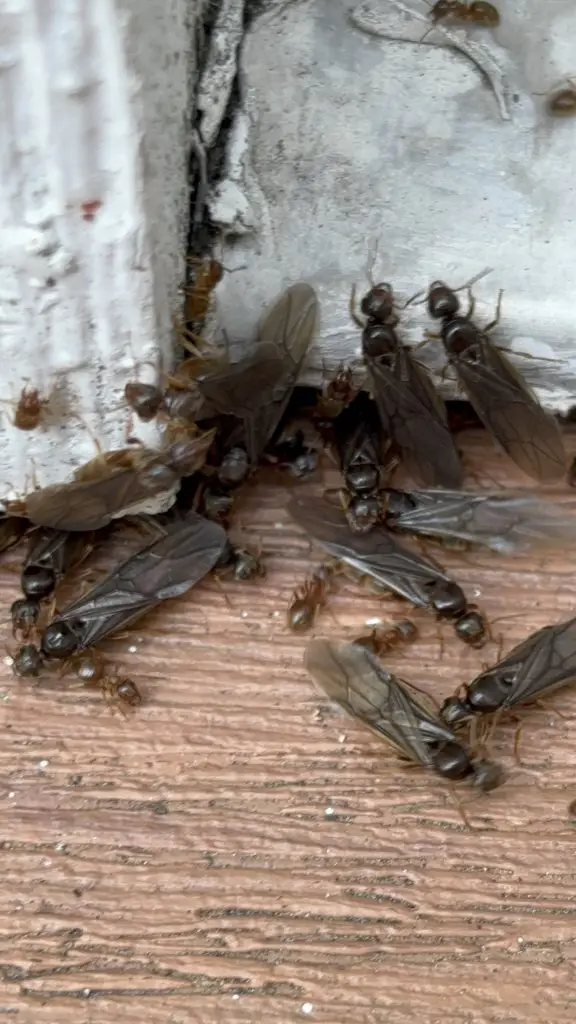
Finding ants in your Seattle kitchen this morning? Before you grab that spray bottle and make the problem worse, spend 60 seconds identifying which species you’re dealing with. The wrong treatment doesn’t just fail it can turn a manageable kitchen problem into a whole-house infestation. After 20+ years eliminating ants throughout Seattle and King County, we’ve learned that homeowners who correctly identify their ant species solve problems 3X faster and spend 60% less on treatment. This guide gives you the exact identification process our technicians use, plus the honest truth about what works (and what makes it worse) for each species. AMPM Exterminators serves Seattle, Bellevue, Kirkland, Redmond, and all Eastside communities with species-specific ant elimination programs. Call (206) 571-7580 for same day ant identification and treatment Licensed ant control specialists | 20+ years King County experience | Guaranteed colony elimination The 60-Second Ant Identification System: Start Here Before you do anything else, answer these three questions: Question 1: Where did you find them? Kitchen/bathroom counters → Likely odorous house ants Near windows/doors with visible wood damage → Likely carpenter ants Near water leak/damp basement → Likely moisture ants Question 2: What size are they? Tiny (rice grain size, 1-2mm) → Odorous house ants Large (pencil eraser size, 6-13mm) → Carpenter ants Medium (sesame seed size, 3-5mm) → Moisture ants, pavement ants Question 3: What do they smell like when crushed? Rotten coconut/blue cheese → Odorous house ants (100% confirmed) No strong smell → Carpenter ants or moisture ants Sweet/citrus → Moisture ants Got your answers? Now match your ant below. The Seattle Big Three: Ants in 95% of King County Homes Ant #1: Odorous House Ants (The Kitchen Invaders) What You’re Seeing: Tiny black ants (1-2mm) in organized trails to food sources Also called: Little black ants, sugar ants, sweet ants, coconut ants The Smell Test (100% Accurate Identification):Crush one ant between your fingers. Smells like rotten coconut or blue cheese? That’s an odorous house ant guaranteed. No other Seattle ant species produces this distinctive smell. Where You’ll Find Them in Your Home: Kitchen locations (90% of sightings): Trails along countertops to sugar bowl, honey jar, or syrup Inside cupboards where cereal boxes or snack packages are stored Around pet food bowls (wet and dry food) Under sink near dishwasher Behind refrigerator near drip pan Bathroom locations (60% of infestations): Trails along baseboards to toothpaste residue Around bathroom sink Near soap scum buildup Why They Love Seattle:Pacific Northwest climate provides perfect conditions. They nest outdoors in landscaping (mulch, under rocks, in planter boxes) and send thousands of workers indoors daily to forage. A single colony can contain 100,000 workers and multiple queens. Why Standard DIY Treatment Fails (And Makes It Worse):When you spray odorous house ants with store bought ant killer, here’s what actually happens: Worker ants detect the repellent chemical They rush back to the nest with danger warning The colony activates “budding” behavior splitting into 3-5 new colonies What was one kitchen trail becomes ants in kitchen + bathroom + bedroom + living room This phenomenon is called colony budding or fragmentation. It’s an evolutionary survival mechanism that makes odorous house ants the #1 most difficult ant to eliminate in Seattle. What Actually Works:Professional elimination requires: Non repellent gel baits that workers carry back to nest Exterior perimeter treatment to target outdoor colonies Sealing entry points (they enter through gaps as small as 1/32 inch) Multiple follow up treatments as new queens emerge DIY success rate: 15-20%Professional success rate: 95%+Timeline: 10-14 days with professional treatment Cost Reality:Professional treatment: $150-250 for typical homeDIY attempt: $40-80 in products that make problem worseCost of NOT treating: Ants spread throughout entire house within 4-6 weeks Seattle Neighborhood Hot Spots:We see highest odorous house ant activity in: Downtown/Belltown condos and apartments (multi-unit buildings provide unlimited colony space) Eastside newer developments (landscaping with bark mulch creates ideal nesting) Queen Anne/Capitol Hill older homes (foundation settling creates entry gaps) Ant #2: Carpenter Ants (The Structure Destroyers) What You’re Seeing: Large black ants (6-13mm), often with reddish legs, near wood or windows Species note: Seattle area has 3 common carpenter ant species all cause similar damage Visual Identification Features: Size comparison: 5-10X larger than odorous house ants About the size of a pencil eraser Easily spotted with naked eye Color variations in King County: All-black (most common 70% of sightings) Black with reddish-brown legs and thorax (Camponotus modoc 25%) Black and red body (Camponotus vicinus 5%) Body shape: Smooth, rounded thorax (no bumps) Single node (bump) between thorax and abdomen Elbowed antennae Large mandibles (jaws) The Sawdust Test (Confirms Active Infestation):Look for small piles of sawdust (called frass) near baseboards, window frames, or door frames. Frass looks like fine sawdust mixed with ant body parts and has a texture like coarse pepper. Finding frass means carpenter ants are actively tunneling and damage is occurring NOW. Where Carpenter Ants Nest in Seattle Homes: Primary nest locations (where queens live): Rotted deck posts in contact with soil Water damaged window sills and frames Roof rafters near leaky skylight or flashing Crawl space rim joists with moisture damage Tree stumps or firewood piles within 50 feet of house Satellite nest locations (workers only, no queen): Wall voids near bathroom or kitchen (moisture from plumbing) Attic insulation near roof leak Door frames with water damage Foam board insulation behind siding Why Seattle Is Carpenter Ant Capital:Three factors make Seattle/Eastside perfect for carpenter ants: Constant moisture: 150+ rainy days annually keeps wood damp Dense tree canopy: Mature trees in Ballard, Queen Anne, Eastside provide natural habitat and highway to homes Older housing stock: Homes built 1950-1990 have inevitable moisture issues from settling The Moisture Connection (Critical to Understand):Carpenter ants don’t eat wood they excavate it to create galleries (tunnels) for nesting. They REQUIRE wood with 15%+ moisture content to tunnel efficiently. This is why carpenter ants are actually a SYMPTOM of a bigger problem: you have a moisture issue. Common moisture sources in Seattle homes: Roof leak from missing shingles or failed flashing Gutter overflow soaking fascia boards Plumbing leak inside walls Poor crawl space ventilation creating condensation Failed exterior caulking around windows Ground contact with deck posts or siding Damage Timeline
Eastside King County, WA Commercial Construction Pest Control Services | Expert Extermination for Building Projects
When managing a construction project, pests can be one of the most damaging and disruptive issues. Eastside King County, WA Commercial Construction Pest Control Services | Expert Extermination for Building Projects ensures your construction site is protected from unwanted pests, preventing delays, health risks, and structural damage. Whether you’re building a new office complex, residential development, or commercial building, Eastside Pest Control is here to provide comprehensive pest control solutions for all types of construction projects. Pests like rodents, termites, ants, and cockroaches can wreak havoc on building materials, electrical wiring, and plumbing, creating dangerous conditions that can halt progress or increase costs. By choosing Eastside King County, WA Commercial Construction Pest Control Services, you’re ensuring that your building project stays on track with minimal disruption and maximum protection. Why Choose Eastside King County, WA Commercial Construction Pest Control Services? Opting for Eastside King County, WA Commercial Construction Pest Control Services provides numerous advantages for contractors, project managers, and construction teams. Here’s why: Common Pests Found in Eastside King County, WA Construction Sites Construction sites are prone to a variety of pest problems due to the disruption of natural environments and the abundance of food and shelter that construction materials provide. The following pests are commonly found on construction sites in Eastside King County, WA: How Eastside King County, WA Commercial Construction Pest Control Services Work Our Eastside King County, WA Commercial Construction Pest Control Services follow a systematic, multi-step approach to ensure pests are fully eliminated and prevented from returning: The Importance of Professional Pest Control in Commercial Construction Projects For construction projects in Eastside King County, WA, professional pest control is critical for the following reasons: Benefits of Early Pest Control Intervention in Eastside King County, WA Construction Sites Addressing pest problems early in the construction process has several key benefits: Preventing Future Pest Infestations on Your Eastside King County, WA Construction Site Preventing future infestations is just as important as addressing the current problem. Here’s how you can keep pests from returning: Why Eastside Pest Control is the Trusted Choice for Commercial Construction Pest Control in Eastside King County, WA Eastside Pest Control is a leading provider of Eastside King County, WA Commercial Construction Pest Control Services. Here’s why: Protect Your Eastside King County, WA Construction Project from Pests Today Pests can cause major setbacks during construction projects, but with Eastside King County, WA Commercial Construction Pest Control Services, you can keep your site pest-free. Protect your investment, ensure the safety of your workers, and keep your project on schedule by contacting Eastside Pest Control today for a customized pest control plan. Let us handle the pests so you can focus on what matters building a successful project.
Attic Rat Removal Eastside: Our 24/7 Emergency Service vs. The Hidden Fire Hazard
Eastside Rat Exterminators | Attic Rodent Removal Services | Emergency Rat Control for Bellevue, Redmond & Kirkland Homes If you’re hearing scratching, scurrying, or chewing sounds above your ceiling in Bellevue, Redmond, or Kirkland, you’re not just dealing with noise pollution. You’re housing a Class 1 Fire Hazard and a Biohazard Risk. Rats in Eastside attics don’t just nest they chew electrical wires (the #1 cause of attic fires), soak insulation with urine (destroying its R value and creating toxic air), and breed rapidly (one pair becomes 50+ in a year). At AMPM Exterminators, we don’t just remove rats. We perform emergency attic decontamination and permanent rodent proofing for Eastside homes. We’re the only local service that includes thermal imaging scans to find every entry point competitors miss. The 3 Step Eastside Rat Crisis Most Homeowners Miss 1. The Entry Point Deception You patch one hole. They use another. Rats need only a ¾ inch gap the size of a quarter to enter. Our technicians use thermal cameras to find the 6 to 8 hidden entry points average Eastside homes have where rooflines meet, pipes enter, and vents are improperly sealed. 2. The Insulation Time Bomb Rat urine soaks fiberglass and cellulose insulation. This: Permanently destroys the insulation’s thermal value Creates ammonia fumes that enter your living space Attracts new pests like carpet beetles and mites Most companies remove rats but leave the toxic insulation. We provide decontamination or replacement quotes. 3. The Electrical Fire Countdown Rats chew wires to wear down their constantly growing teeth. A single chewed wire in your Bellevue home’s attic can smolder for hours before igniting. Our inspection includes attic electrical hazard assessment. Our Eastside Specific Attic Rat Protocol Day 1: Emergency Containment 0 to 24 Hours Priority Dispatch: Technician enroute to your Redmond, Kirkland, or Sammamish home within 2 to 4 hours of your call. Thermal Entry Audit: Infrared scan of entire roofline and foundation. Immediate Trapping: Strategic placement of professional-grade traps in attic and critical pathways. Damage Assessment: Documentation of contamination and hazards for insurance. Day 2 to 7: Exclusion Fortification Metal Fabric Installation: Sealing ALL entry points with copper mesh and steel flashing materials rats cannot chew through like caulk or foam. Vent & Soffit Guard Installation: Rat proof screening on all attic vents. Trim Tree Branch Access: Guidance on vegetation management a major issue in wooded Eastside neighborhoods. Day 8 to 30: Decontamination & Monitoring Insulation Assessment: Recommendations for cleaning or replacement. Sanitization Treatment: Enzyme based cleaning of affected areas. Warranty Period: Monthly monitoring to ensure zero reinfestation. They Found What 2 Other Eastside Companies Missed “We had rats in our Redmond attic for months. Two other companies just set traps and left. AMPM used a thermal camera and found they were climbing up INSIDE our stucco wall from a gap in the foundation, completely bypassing the roof. They sealed it with metal, and the problem ended immediately. Their inspection alone was worth the cost.” The Chen Family, Redmond, WA Eastside Neighborhood Risk Factors We Know Bellevue/Medina: Larger properties with more vegetation to roof contact points Kirkland/Houghton: Older homes with original vents and roofing materials Redmond/Education Hill: Proximity to wooded areas and creek corridors Sammamish/Issaquah: Newer construction with complex rooflines and hidden voids Bothell/Woodinville: Rural urban interface with field rodent pressure The Cost of Waiting vs. The Value of Our Guarantee If You Wait or Use Cheap Service: With Our Eastside Attic Protocol: Continued electrical fire risk All wiring inspected and protected Insulation loses 60%+ R value Decontamination or replacement included Rats move to walls, then kitchen Complete home exclusion guaranteed Multiple service calls needed One time comprehensive solution Average 2 Year Cost: $3,000 to $8,000+ Fixed Price Solution: $1,800 to $3,500 Your Home is Your Largest Investment. Protect It Like One. Don’t trust your Eastside home to generic “trap and go” services. Our comprehensive attic rat removal includes what others charge extra for or don’t offer at all. Call for 24/7 Eastside Attic Emergency Service: (425) 495-0306 (Eastside Direct Line) (206) 571-7580 (Text for Fast Response) We serve all Eastside communities: Bellevue, Redmond, Kirkland, Sammamish, Issaquah, Bothell, Woodinville, Mercer Island, and Newcastle. For general rodent problems not in the attic, see our comprehensive Seattle rodent control services. Eastside Attic Rat Removal FAQ Q: How quickly can you get here for an attic emergency?A: For active attic infestations, we guarantee same day or next day service for all Eastside cities. Our team is dispatched from Bellevue, so response times are typically under 2 hours. Q: Do you work with insurance on fire damage claims?A: Yes. We provide detailed documentation of rodent caused damage chewed wires, contaminated insulation that is accepted by insurance companies for claims. We’ve helped Eastside homeowners with State Farm, Allstate, and PEMCO claims. Q: Are your exclusion materials really rat-proof?A: Absolutely. We use hardware cloth steel mesh, copper wool, and steel flashing materials with a Mohs hardness rating rats cannot chew through. Unlike caulk, foam, or plastic, our materials last decades. Q: My HOA has restrictions on exterior modifications. Can you work within them?A: Yes. We’re familiar with Eastside HOA requirements from Downtown Bellevue condos to Sammamish Plateau communities. Our exclusions are designed to be discreet and comply with architectural guidelines. Q: What makes you different from other Eastside rat control companies?A: Three things: 1) Thermal imaging technology to find all entry points, 2) Comprehensive approach that includes decontamination, not just removal, 3) Eastside only focus we know the specific construction styles and rodent patterns in every neighborhood.
Ant Exterminators | Ant Control & Removal Services in Seattle
Professional Ant Exterminators & Control Services When ant removal becomes a weekly chore, it’s time for professional ant extermination. At AMPM Exterminators, we are your local ant control service experts, specializing in eliminating infestations of little black ants, carpenter ants, and other common Seattle species. Our ant pest control methods go beyond sprays we target the colony for guaranteed ant pest removal. Our Ant Extermination & Control Process We follow a proven, three-step protocol for all ant removal services: 1. Inspection & Colony MappingOur certified ant exterminators perform a detailed inspection to: Identify the ant species (little black ant, carpenter ant, etc.). Locate the primary nest and any satellite colonies. Trace foraging trails back to their entry points. Determine the colony’s current food preference to select the most effective bait. 2. Targeted Elimination & ExterminationWe use industry-leading methods for complete ant extermination: Commercial Gel Baits: We apply professional-grade baits that worker ants carry back to the nest, effectively poisoning the queen and the entire colony the core of effective ant pest control. Residual Barrier Treatments: We create a protective, long-lasting barrier around your home’s perimeter and key entry points to prevent new ants from entering. Nest Direct Treatment: When accessible, we treat the nest directly for immediate colony collapse. 3. Prevention & Guaranteed ResultsOur ant control service includes: Exclusion Recommendations: Advice on sealing cracks and removing attractants. Follow Up Visits: To ensure the ant removal is complete. Service Guarantee: We stand behind our work. If ants return within the warranty period, we will retreat at no extra cost. Why Choose Our Ant Pest Control Service? Local Exterminators: We know the ant species and patterns specific to the Seattle area. Guaranteed Ant Removal: We focus on permanent colony elimination, not temporary fixes. Safe & Effective: Our ant extermination methods are family and pet safe when applied as directed. Transparent Pricing: No hidden fees. You get a clear quote for our ant control services upfront. Stop the Infestation. Start the Elimination. Get professional ant pest removal you can trust. We offer same day and next day service for urgent problems. Call Your Local Ant Exterminators: (206) 571 7580 Serving Seattle, Bellevue, Redmond, and the greater Eastside for all ant control services. Ant Extermination FAQ Q: Are you a licensed ant exterminator service?A: Yes. Our technicians are licensed and certified by the State of Washington. We are fully insured for your protection. Q: How much do ant removal services cost?A: The cost for ant extermination depends on the species, the size of the infestation, and your property. We provide free, in-person inspections with a fixed-price quote no surprises. Q: How is your ant pest control different from store bought products?A: Store-bought sprays and baits are weak and often misapplied. Our ant control services use professional-strength products and, more importantly, expert knowledge of ant behavior to apply them in a way that destroys the entire colony. Q: Do you offer emergency ant removal?A: Yes. For severe infestations, we offer priority scheduling. Call us, and we will get a technician to you as quickly as possible. Helpful Resources:
Seattle Ant Control: The Mistakes Homeowners Make That Turn Minor Problems Into $8,000 Nightmares
Found ants in your Seattle kitchen this morning and thinking about grabbing that spray can? Stop. What you’re about to do could multiply your ant problem by 5X and cost you thousands in structural repairs. After eliminating thousands of ant infestations throughout Seattle and King County over 20 years, we’ve identified the exact mistakes homeowners make that transform manageable $200 problems into $5,000-8,000 disasters. This guide gives you the truth about Seattle ant control including what the internet gets dangerously wrong. AMPM Exterminators specializes in species-specific ant elimination throughout Seattle, Bellevue, Kirkland, Redmond, and all King County communities. Call (206) 571-7580 for same-day ant identification and elimination Licensed ant control specialists | 20+ years King County | Guaranteed colony elimination | No contracts required The $8,000 Mistake Seattle Homeowners Make Every Spring The Story You Need to Hear: Homeowner in Ballard sees 5-10 large black ants daily in kitchen. Googles “how to get rid of ants.” Every article says: “Seal entry points.” Spends entire weekend caulking every crack. Ants disappear in 3 days. Feels like a genius. Eight months later, cutting drywall to add outlet. Sawdust everywhere. Hundreds of ants inside wall. Turns out: carpenter ants. He trapped them INSIDE his walls. Final damage: 6 wall studs destroyed, floor joists compromised, moisture problem he didn’t know existed (why ants were there). Total cost: $8,000 What professional would have cost in April: $400 What went wrong: He followed generic “ant control” advice for a species that requires completely different treatment. The internet doesn’t differentiate between ant species. You seal entry points AFTER elimination, not before. When you seal carpenter ants inside, they don’t leave they excavate deeper into your structure looking for exit routes. Months of unchecked tunneling = extensive damage. This isn’t rare. We see 13-25 of these cases every month in Seattle. It’s why we’re writing this guide. The 4 Ant Species Destroying Seattle Homes And Why One Treatment Doesn’t Work for All Species #1: Odorous House Ants (90% of Seattle Infestations) What you’re seeing: Tiny black ants (1-2mm, rice grain size) in organized trails to food Also called: Little black ants, sugar ants, sweet ants (though “sugar ants” aren’t a real species) The 100% Accurate Identification Test: Crush one ant between your fingers. Smells like rotten coconut or blue cheese? That’s odorous house ant guaranteed. No other Seattle ant species produces this smell. Why They’re Everywhere in Seattle: Pacific Northwest climate creates perfect conditions: 150 rainy days leads to consistent moisture Moderate temperatures year-round is no winter die off Dense urban housing is unlimited nesting sites Landscaping with bark mulch is ideal outdoor colonies A single odorous house ant colony can contain 100,000 workers and dozens of queens. They nest outdoors (mulch, under rocks, in planter boxes, beneath patios) and send thousands of foragers indoors daily. Where You’ll Find Them: Kitchen hot spots (90%): Trails along countertops to sugar bowl, honey jar, syrup Inside cupboards targeting cereal boxes, cracker packages Around pet food bowls (wet and dry) Under sink near dishwasher drip pan Behind refrigerator at drip tray Bathroom locations (60%): Baseboards leading to toothpaste residue Around bathroom sink at soap buildup Shower caulking gaps Why Store Bought Spray Makes It Catastrophically Worse: This is CRITICAL to understand: When you spray odorous house ants with Raid, Home Defense, or any store-bought ant killer, here’s what actually happens: Step 1: Worker ants detect repellent chemical (pyrethroids)Step 2: They rush back to nest with danger warning pheromoneStep 3: Colony activates “budding” behavior an evolutionary survival mechanismStep 4: One colony with one location splits into 3-5 separate colonies at different locationsStep 5: What was ants in kitchen becomes ants in kitchen , bathroom , bedroom , living room , basement This is called colony fragmentation. You literally multiply your problem. Timeline of DIY failure: Day 1: Buy $12.99 Raid from Home Depot, spray visible ants, feel victorious Day 3: Ants gone from kitchen (false success colony is budding) Week 2: Ants now in bathroom (new colony established) Week 3: Buy $19.99 “professional strength” spray, treat bathroom Week 4: Ants now in bedroom AND living room (2 more colonies formed) Week 5: Call professional, pay $350 Total cost: $32 in products plus $350 professional equal to $382 plus 5 weeks frustration If called professional Week 1: $200-250 + problem solved in 10 days DIY success rate for odorous house ants: 8-12%Professional success rate: 95%+ What Actually Works: Professional elimination requires: Phase 1: Exterior colony targeting (Days 1-3) Locate outdoor nest sites using foraging trail analysis Apply non repellent gel baits at all colony locations Ants cannot detect non repellent products, carry them back unknowingly Product spreads through colony via trophallaxis (food sharing) Phase 2: Perimeter protection (Days 1-7) Non repellent barrier treatment around foundation Prevents new colonies from establishing Phase 3: Interior baiting (Days 1-10) Strategic gel bait placement at kitchen/bathroom activity Workers transport bait to all satellite colonies Phase 4: Entry point sealing (Days 8-14) Only seal AFTER colony elimination confirmed Prevent reentry from new colonies Timeline: 10-14 days complete eliminationFollow up: 30 day warranty, return if any activity Cost Reality: Professional odorous house ant treatment: Single family home: $150-300 Multi family unit: $200-350 (if colony in building structure) Includes: Inspection, exterior treatment, interior baiting, sealing, 30 day warranty DIY attempt: Store products: $30-80 Time invested: 10-15 hours Success rate: 8-12% Result: Usually makes problem worse Seattle Neighborhood Hot Spots: Where we see highest odorous house ant activity: Downtown/Belltown/South Lake Union: Multiunit buildings provide unlimited colony space Shared walls allow colony expansion throughout building Landscaping with continuous bark mulch connects all units Eastside newer developments (Redmond, Sammamish, Newcastle): Modern landscaping with thick bark mulch leads to ideal nesting New construction gaps in siding systems leads to easy entry Lack of mature trees (less shade) , warmer soil , more attractive Queen Anne/Capitol Hill/Fremont: Older foundation settling creates entry gaps Mature landscaping with established colonies Dense housing allows rapid spread building to building Species #2: Carpenter Ants (The $5,000-20,000 Structural Destroyer) What you’re seeing: Large black ants