
How We Eliminated a Bellevue Kitchen Ant Infestation in 5 Days (And Why DIY Failed for 3 Months)
When Sarah M. contacted AMPM Exterminators in late April 2024, she was at her breaking point. Her Bellevue Wilburton neighborhood kitchen had been overrun with tiny black ants for three months, and nothing she tried was working.
“I’d spent over $200 on sprays, baits, and natural remedies,” Sarah told us during the initial consultation. “Every morning I’d wake up to find 30 to 40 ants on my counters. I was embarrassed to have people over.”
This is the detailed account of how we identified the problem, why her DIY attempts failed, and how we achieved complete ant elimination in just 5 days with strategies that work specifically for Bellevue homes.
The Initial Call: A Frustrated Bellevue Homeowner
Sarah’s situation is common in Bellevue, particularly in neighborhoods near Kelsey Creek, Mercer Slough, and other wetland areas where moisture attracts ant colonies. Her 1980s era home in Wilburton had all the classic risk factors for persistent ant problems throughout King County.
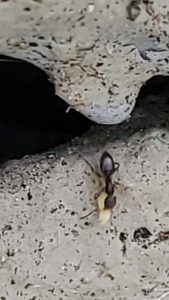
What Sarah reported:
- Small black ants (approximately 1/8 inch long)
- Concentrated in kitchen, particularly around sink area
- Activity increased dramatically in early March
- Ants appeared within hours of cleaning
- Trails leading from window above sink
- DIY products provided 2 to 3 days relief maximum
Critical detail Sarah mentioned: “They seem to come back worse every time I spray.”
This single observation told us immediately why her DIY approach was failing a problem we’ll explain below.
The Inspection: What We Found in This Bellevue Home
Our technician Marcus arrived at Sarah’s Wilburton home on a Tuesday morning for comprehensive inspection. What he discovered explained everything about why her three-month DIY battle was unwinnable.
Identification: Odorous House Ants (Not “Sugar Ants”)
First, proper species identification. The “tiny black ants” Sarah had been fighting were odorous house ants (Tapinoma sessile) commonly called “sugar ants” in the Pacific Northwest but requiring very different treatment approaches than actual sugar ants.
Key identifying characteristics:
- Dark brown to black coloration
- 1/16 to 1/8 inch long
- Emit distinctive smell when crushed (rotten coconut)
- Move in erratic, rapid patterns
- Form super colonies with multiple queens
This identification was critical because odorous house ants respond poorly to repellent sprays which explained why Sarah’s Raid applications made things worse, not better.
The Hidden Moisture Problem
Marcus discovered a slow leak from the kitchen sink drain pipe approximately one drip every 20-30 seconds. Over three months, this created:
- Persistent moisture in the wall cavity behind the sink
- Softened drywall at the base of the wall
- Ideal conditions for odorous house ant colonies
- Access to water the colony required for survival
“This leak isn’t causing visible damage yet,” Marcus explained to Sarah, “but it’s essentially providing a water source that sustains the ant colony living in your wall.”
Multiple Entry Points
Inspection revealed five separate access points ants were using:
- Gap around kitchen window frame (primary entry)
- Space where sink plumbing enters wall (major entry)
- Crack in tile grout behind sink (active trail)
- Gap beneath back door weatherstripping (minor entry)
- Opening around electrical outlet (occasional entry)
Sarah had sealed only the window gap with caulk which redirected ants to the four other entrances she didn’t know existed.
The Colony Location
Using moisture detection equipment and observation of ant behavior, Marcus determined the main colony was located:
- Inside the wall cavity behind the kitchen sink
- Approximately 2 to 3 feet below counter level
- Estimated population: 15,000 to 20,000 workers
- Multiple satellite nests in wall void
- Access to moisture from slow leak
This explained why surface treatments failed. Sarah was treating symptoms (visible ants) while the cause (hidden colony with 20,000 members) remained untouched.
Why Sarah’s DIY Attempts Made Things Worse
Understanding what Sarah tried and why each approach failed or backfired provides crucial lessons for Bellevue homeowners facing similar situations.
Attempt 1: Raid Ant Spray (Weeks 1 to 4)
What Sarah did: Sprayed visible ants and trails twice daily
Why it failed: Raid and similar products are repellent based insecticides. When odorous house ants encounter repellent chemicals, their super colony survival instinct triggers “budding” the colony splits into multiple smaller colonies that spread to new locations.
Sarah’s spraying didn’t eliminate the colony. It caused it to fragment into satellite nests throughout her wall voids, spreading the infestation from one area to three. This is one of the most common DIY ant control mistakes homeowners make.
Cost: $45 (three bottles over four weeks) Result: Infestation spread to multiple areas
Attempt 2: Terro Liquid Ant Baits (Weeks 5 to 8)
What Sarah did: Placed bait stations along ant trails
Why it initially worked, then failed: Terro baits use borax and sugar, which works excellently for Argentine ants and other species. Odorous house ants will consume it, but their super colony structure makes elimination difficult.
In super colonies with multiple queens, killing 30 to 40% of workers doesn’t collapse the colony it just triggers increased reproduction. The colony rebounds within 2 to 3 weeks.
Additionally, Bellevue’s spring weather brought increased natural food sources outdoors, reducing bait consumption as ants had alternatives.
Cost: $38 (six boxes of bait stations) Result: 2 week reduction in visible ants, then full return
Attempt 3: Vinegar and Essential Oils (Weeks 9 to 10)
What Sarah did: Daily cleaning with vinegar solution and peppermint oil
Why it failed: These natural approaches disrupt scent trails temporarily but don’t affect colony populations. Ants simply establish new trails within hours.
Peppermint oil may repel some ant species short term, but odorous house ants habituate quickly to essential oil scents.
Cost: $35 (vinegar, peppermint oil, spray bottles) Result: Zero long term impact
Attempt 4: Sealing Entry Points (Week 11)
What Sarah did: Caulked the window gap where she saw most ants
Why it made things worse: This is another critical mistake covered in our guide on what NOT to do when fighting ants. Sealing one entry point while the colony remains inside just forces ants to use different routes or in Sarah’s case, to establish new trails through the four unsealed entries.
Sarah sealed the window but missed the sink plumbing gaps, door gaps, and outlet openings. The colony simply rerouted.
Cost: $25 (caulk and tools) Result: Ants appeared in new locations within 48 hours
Total DIY Investment Over 3 Months
Financial cost: $217 in products and materials
Time investment: Approximately 20 to 25 hours
Ants eliminated: 0%
Frustration level: Maximum
The Professional Solution: Our 5 Day Elimination Strategy
Unlike Sarah’s approach of treating symptoms, our professional ant control strategy targeted the actual problem: the colony itself, the moisture supporting it, and the conditions allowing establishment.
Day 1: Tuesday Initial Treatment
Morning (9 AM to 11 AM):
Marcus implemented the first phase of treatment:
1. Non Repellent Gel Bait Application
Unlike Sarah’s Terro baits, we used professional grade non-repellent gel bait formulated specifically for odorous house ants. Key differences:
- Contains proprietary attractants optimized for Pacific Northwest odorous house ants
- Non repellent formula (ants don’t detect it as threat)
- Delayed action toxicant (ants return to colony before dying)
- Applied directly in harborage areas, not just trails
Marcus applied gel bait in 12 strategic locations:
- Inside wall void through removed outlet plate
- Along sink plumbing penetrations
- Under sink cabinet in moisture-affected areas
- Behind dishwasher
- Inside wall cavity below window (accessed through drilled inspection hole)
- Along baseboards in affected areas
2. Insect Growth Regulator (IGR) Application
Professional IGR was applied to all harborage areas and wall voids. This is part of our comprehensive Integrated Pest Management approach that addresses the entire colony lifecycle. This prevents ant larvae from maturing to reproductive adults, breaking the colony’s reproduction cycle.
This is unavailable to DIY consumers and critical for super colony elimination.
3. Dust Application in Wall Voids
Boric acid dust (professional grade, not consumer borax) was applied into wall voids through small drilled access points. This dust:
- Remains effective indefinitely in dry wall spaces
- Kills ants through contact (dehydration)
- Spreads throughout colony as ants groom each other
- Provides ongoing protection even after treatment
4. Documentation
Marcus photographed all entry points, bait placements, treatment areas, and the moisture issue for our records and Sarah’s reference.
What Sarah was told to expect:
“You’ll likely see INCREASED ant activity for 2 to 3 days. This is actually good it means ants are consuming the bait and carrying it back to the colony. Don’t spray or clean up the ants. Let them do their job.”
This counter-intuitive advice is critical. Most homeowners panic when ant activity increases initially and resume spraying which ruins the treatment.
Day 2: Wednesday Peak Activity
Observation: Exactly as predicted, Sarah reported seeing MORE ants than before treatment.
“There were maybe 60 to 70 ants on the counter this morning,” she texted. “Is this normal? Should I be worried?”
Marcus responded: “Completely normal. The bait is working. The colony is sending more workers to gather what they perceive as a valuable food source. Each one is carrying poison back to the nest. Give it 48 more hours.”
Why this happens: Non repellent baits don’t warn ants of danger. Workers find it, recruit nestmates through pheromone trails, and multiple workers transport it to the colony for distribution to all members including queens.
This recruitment phase creates temporarily increased visible activity but it’s the mechanism that eliminates colonies DIY products can’t reach.
Day 3: Thursday Activity Begins Declining
Observation: Sarah reported noticeable reduction in ant numbers.
“Maybe 20 to 25 ants this morning instead of the 60 to 70 yesterday,” she reported. “They seem slower too, less frantic.”
What was happening inside the colony:
The delayed action toxicant in our professional bait takes 24 to 48 hours to kill ants. During this delay:
- Workers consume bait and share it with nestmates through trophallaxis (food sharing)
- Bait reaches queens, brood, and workers throughout the colony
- Multiple queens begin dying as they consume contaminated food
- Worker population begins crashing
- Colony loses ability to maintain trails and food gathering
The “slower” movement Sarah observed indicated ants were in various stages of intoxication from the bait.
Day 4: Friday Dramatic Reduction
Observation: Sarah reported seeing only 5 to 7 ants during the entire day.
“It’s like someone flipped a switch,” she texted. “The difference from two days ago is incredible.”
Colony status: With queens dead or dying and worker population crashed by 80 90%, the colony could no longer maintain organized foraging. The few remaining ants were disorganized stragglers from satellite nests.
Additional action: Marcus scheduled the follow up visit for the next day to assess, verify elimination, and begin exclusion work.
Day 5: Saturday Follow Up Visit and Exclusion
Morning (10 AM to 12 PM):
Marcus returned for comprehensive follow up:
1. Assessment
Inspection confirmed:
- Zero ant activity in kitchen
- No trails visible
- Bait consumption stopped (indicating no active colony)
- No new ants at previous entry points
“Colony is eliminated,” Marcus confirmed to Sarah. “Now we prevent reestablishment.”
2. Exclusion Work
Now that the colony was eliminated (NOT before), Marcus sealed all entry points:
- Caulked window frame gaps (1/4 inch gap)
- Sealed plumbing penetrations under sink with expanding foam and steel wool
- Replaced damaged weatherstripping on back door
- Sealed electrical outlet gaps
- Filled inspection holes with appropriate materials
Critical timing: Exclusion work happens AFTER colony elimination, not before. Sealing entries while the colony is active traps ants inside (as Sarah had done) or forces them to new locations.
3. Moisture Remediation Recommendation
Marcus provided detailed documentation of the sink leak with photos and recommended a plumber repair the drain connection. This minor plumbing fix ($100-150) would eliminate the moisture attracting future colonies.
“The leak isn’t causing visible damage yet,” Marcus explained, “but it created the conditions allowing this colony to establish. Fix it and you dramatically reduce chances of future ant problems.”
4. Preventative Guidance
Sarah received specific recommendations for her Bellevue Wilburton home:
- Keep sink area dry (wipe after use)
- Fix the plumbing leak within 2 weeks
- Monitor the back door weatherstripping (check quarterly)
- Clean up food debris immediately
- Keep trash in sealed containers
- Watch for moisture issues (Bellevue’s climate creates ongoing risk)
The Results: Complete Elimination Verified
Day 6 to 30: Zero ant activity reported
Sarah contacted us two weeks post treatment: “Haven’t seen a single ant since day 5. I almost can’t believe it after three months of fighting them every day.”
30 Day Follow Up: Marcus conducted complimentary inspection
- No ant activity anywhere in home
- All exclusion work intact
- Moisture issue resolved (Sarah had hired plumber)
- Zero evidence of colony reestablishment
90-Day Check-In: Phone follow-up confirmed continued success
“Still ant-free,” Sarah reported. “Best $275 I ever spent, especially considering I’d already wasted $200 on stuff that didn’t work.”
Read more customer success stories like Sarah’s.
Why This Worked: The Professional Advantage Explained
Sarah’s case demonstrates critical differences between DIY and professional ant control especially for Bellevue homes with specific regional challenges.
Professional Products Unavailable to Consumers
Non-repellent baits: Our formulations don’t trigger colony budding like consumer sprays do. Ants don’t detect threat, so they transport poison throughout super-colonies instead of fleeing.
Professional IGRs: Insect growth regulators aren’t available at consumer strength. They break reproduction cycles that super-colonies use to rebound from population losses.
Commercial grade dusts: Professional boric acid dust and desiccant products last indefinitely in wall voids, providing ongoing protection consumer borax can’t match.
Proper Species Identification
Sarah treated “tiny black ants” generically. We identified odorous house ants specifically and used species appropriate methods.
Different ant species require completely different approaches:
- Argentine ants respond well to baiting
- Carpenter ants need colony location and direct treatment
- Odorous house ants require super colony protocols
- Moisture ants indicate water problems requiring fixing
Treating the wrong species with inappropriate methods wastes time and money exactly what happened to Sarah for three months.
Understanding Ant Biology and Behavior
Professional training provides critical knowledge:
- Recognizing super colony behavior
- Knowing why repellent sprays cause budding
- Understanding colony reproduction and recovery rates
- Identifying conducive conditions (moisture in Sarah’s case)
- Proper treatment timing (colony elimination before exclusion)
This knowledge can’t be learned from internet articles or product labels.
Finding Hidden Colonies
Sarah treated visible ants on counters. We found the 20,000 member colony in her wall 3 feet below where she saw activity.
Professional inspection tools, experience, and systematic assessment locate colonies homeowners never find. You can’t eliminate what you can’t locate.
Correct Treatment Sequence
Sarah’s sequence: Spray → Bait → Seal → More spraying
Correct sequence: Identify → Treat colony → Verify elimination → Exclusion → Address moisture
This correct order prevented trapping ants inside (as Sarah had done) and eliminated the actual problem before preventing reentry.
Lessons for Bellevue Homeowners Fighting Ants
Sarah’s experience provides valuable insights for anyone in Bellevue, Redmond, Kirkland, or surrounding areas dealing with persistent ant problems.
1. Species Identification Comes First
“Tiny black ants” could be five different species requiring completely different treatments. Professional identification ensures appropriate methods from the start.
Free identification: Take clear photos of your ants and text them to us for free identification. We’ll identify the species and advise whether DIY is feasible or professional treatment necessary.
2. Repellent Sprays Often Make Things Worse
This is the most common mistake we see. Raid, Hot Shot, and similar repellent sprays cause odorous house ants to scatter and bud spreading one colony into multiple colonies.
Alternative: If you need immediate relief before professional treatment, use soapy water (1 tablespoon dish soap per cup of water) to kill visible ants without causing budding. It won’t eliminate the colony but won’t spread it either. For true emergencies, we offer same day ant control service.
3. Moisture Problems Attract Ants
Sarah’s hidden sink leak created conditions supporting the colony. Bellevue’s climate (41 inches average annual rainfall) creates ongoing moisture risks in homes, especially:
- Older homes (pre1990) with aging plumbing
- Homes near wetlands (Kelsey Creek, Mercer Slough, Phantom Lake)
- Properties with poor drainage
- Homes with crawl spaces (moisture accumulation)
Prevention: Annual professional structural inspection identifies moisture problems before they attract ant colonies. This costs $100 to 150 but prevents $500 to 2,000 remediation later.
4. Exclusion Timing Matters Critically
Never seal entry points while ants are active inside your walls. This traps them, forcing deeper interior invasion.
Correct sequence:
- Eliminate the colony
- Verify no activity for 3 to 5 days
- THEN seal entry points
Sarah learned this the expensive way don’t repeat her mistake.
5. Super-Colonies Require Professional Approaches
Odorous house ant super colonies with multiple queens survive DIY attempts because:
- Killing 50% of workers doesn’t collapse the colony
- Multiple queens maintain reproduction
- Satellite nests reinfest treated areas
- Colony budding creates new colonies from threatened ones
Professional protocols specifically designed for super-colony elimination provide the only reliable solution.
6. The DIY Cost Adds Up Quickly
Sarah spent $217 over three months on products that didn’t work.
Professional treatment cost $275 and solved the problem in 5 days.
Financial comparison:
- DIY: $217 + 25 hours labor + 3 months frustration = failure
- Professional: $275 + 0 hours labor + 5 days = complete elimination
Beyond direct costs, consider:
- Time value (25 hours at $20/hour = $500 opportunity cost)
- Stress and frustration
- Food waste from contaminated items
- Embarrassment affecting social plans
Professional treatment wasn’t more expensive it was dramatically cheaper when accounting for total costs.
Bellevue Specific Ant Challenges
Sarah’s Wilburton neighborhood shares characteristics common throughout Bellevue and the Eastside that create particular ant control challenges:
Aging Housing Stock
Much of Bellevue’s residential development occurred in the 1960s to 1980s. These homes feature:
- Crawl space construction (moisture accumulation)
- Aging plumbing systems (hidden leaks)
- Settled foundations (cracks providing entry)
- Original weatherstripping (deteriorated seals)
- Outdated construction standards (more gaps and penetrations)
These factors combine to create ideal conditions for ant establishment. Sarah’s 1980 home had all these risk factors.
Proximity to Water and Wetlands
Bellevue’s geography creates permanent ant pressure:
- Kelsey Creek system throughout central Bellevue
- Mercer Slough nature park in Wilburton and Enatai
- Phantom Lake and Surrey Downs wetlands
- Lake Washington waterfront in Meydenbauer and Enatai
- Numerous retention ponds in newer developments
Homes within 1/4 mile of these water features experience elevated ant activity. The moisture and vegetation provide ideal outdoor habitat, and nearby homes become invasion targets.
Sarah’s home was 0.3 miles from Kelsey Creek prime ant pressure territory.
Mild Climate Supporting Year Round Activity
Unlike colder regions where winter kills ant populations, Bellevue’s mild climate (average winter low of 37°F) allows ants remaining active year round as explained in our ant season guide.
Practical impact:
- No natural population die off
- Colonies grow continuously without winter checks
- Indoor infestations can establish any month
- Prevention and monitoring must be year round, not seasonal
Dense Urban Development Spreading Colonies
As Bellevue develops more densely, especially downtown and in urban villages, ant colonies spread between adjacent properties through:
- Shared walls (townhomes, condos)
- Connected utility lines
- Continuous landscape features
- Construction disturbance pushing colonies into neighboring properties
Sarah’s Wilburton neighborhood is transitioning from single family to mixed use, creating conditions where disturbed colonies seek new homes like Sarah’s.
The Complete Cost Breakdown
Let’s be completely transparent about professional ant control costs versus DIY attempts:
Sarah’s DIY Attempt (3 Months)
| Product/Material | Cost | Effectiveness |
|---|---|---|
| Raid Ant Spray (3 bottles) | $45 | Made worse (caused budding) |
| Terro Baits (6 boxes) | $38 | Temporary (2 weeks) |
| Vinegar & Essential Oils | $35 | Zero impact |
| Caulk & Tools | $25 | Ineffective (wrong timing) |
| Cleaning Supplies (extra) | $18 | Necessary but not solution |
| Paper Towels (extra usage) | $14 | Consumed daily |
| Food Waste (contaminated items) | $42 | Direct loss |
| Total DIY Cost | $217 | 0% elimination |
| Time Investment | Hours | Value at $20/hr |
|---|---|---|
| Shopping/research | 5 hrs | $100 |
| Application/treatment | 12 hrs | $240 |
| Cleaning/monitoring | 8 hrs | $160 |
| Total Time Cost | 25 hrs | $500 |
Total DIY Investment: $717 (direct costs + time value)
Result: Complete failure, infestation spread
Professional Treatment
| Service Component | Cost | Effectiveness |
|---|---|---|
| Initial Inspection | $75 | Species ID, colony location, moisture detection |
| Treatment (bait, IGR, dust) | $150 | Complete elimination in 5 days |
| Follow-up & Exclusion | $50 | Prevention, verification, warranty |
| Total Professional Cost | $275 | 100% elimination |
| Time Investment | Hours | Sarah’s Effort |
|---|---|---|
| Initial consultation | 1 hr | Schedule appointment |
| During treatment | 0 hrs | Continue normal routine |
| Follow-up | 30 min | Brief walkthrough |
| Total Time Cost | 1.5 hrs | Minimal disruption |
Total Professional Investment: $275 + negligible time
Result: Complete elimination, ongoing protection, warranty
The Real Comparison
DIY attempt: $717 total investment for complete failure
Professional treatment: $275 for complete success
Savings with professional approach: $442 plus immediate resolution
This doesn’t account for:
- Reduced stress and frustration
- No food contamination concerns
- No social/entertaining limitations
- Confidence in long term solution
What Makes AMPM Exterminators’ Approach Different
Sarah could have called any of several pest control companies serving Bellevue. Here’s why our approach achieved 5 day elimination where her DIY attempts failed for 3 months:
Bellevue Specific Expertise
We’ve treated thousands of Bellevue homes since 2015. We understand:
- Regional ant species and their behavior patterns
- Bellevue’s neighborhoods and their specific challenges
- Construction types common in different Bellevue areas
- Seasonal patterns affecting Eastside properties
- Moisture issues from Bellevue’s climate and geography
This local knowledge informed every decision in Sarah’s treatment from initial assessment through final recommendations.
Comprehensive Inspection Before Treatment
Many companies rush to treatment, applying generic protocols without thorough assessment. Our inspection included:
- Species identification (critical for appropriate treatment)
- Colony location determination (can’t treat what you can’t find)
- Moisture detection (addressing root causes)
- Entry point mapping (5 separate entries found)
- Risk factor assessment (future prevention)
This 90 minute investment upfront ensured our treatment targeted actual problems, not just symptoms.
Integrated Pest Management (IPM)
Rather than just applying pesticides, our IPM approach combined:
- Biological controls (IGR breaking reproduction)
- Chemical controls (targeted baiting)
- Physical controls (exclusion after elimination)
- Cultural controls (moisture remediation recommendations)
This multifaceted strategy provides more effective, longer lasting results than single method approaches.
Species Specific Protocols
Our treatment for Sarah’s odorous house ants differed completely from what we’d use for:
- Carpenter ants (direct colony treatment, moisture correction)
- Moisture ants (identify water intrusion, treat colonies)
- Argentine ants (perimeter applications, liquid baiting)
- Pavement ants (crack/crevice treatment, exterior focus)
Generic approaches work poorly because different species have completely different biology, behavior, and colony structures.
Follow Through and Verification
Treatment doesn’t end when the technician leaves. Sarah’s service included:
- Text support during the treatment period
- Scheduled follow up inspection
- Exclusion work after elimination verified
- 90 day warranty on treatment
- Annual inspection option for prevention
This ensures problems are actually solved, not just temporarily suppressed.
Education and Prevention
Marcus spent time explaining:
- Why Sarah’s DIY attempts failed
- What was actually happening in her walls
- How treatment would work and what to expect
- Prevention strategies specific to her home
- When to call for help in the future
This knowledge helps Sarah prevent future problems, not just react to current ones.
Frequently Asked Questions from Bellevue Homeowners
After Sarah shared her experience with neighbors, several common questions emerged that we’ll address here:
“Can I just use the same products professionals use?”
Some professional products are available to consumers, but:
- Professional formulations are stronger and more effective
- Application technique matters as much as product choice
- Knowing WHERE to apply is critical (locating colonies)
- Understanding WHEN to use each product prevents mistakes
- Combining multiple products requires expertise
Sarah bought professional grade borax based baits. They failed because she didn’t know how to use them for super colony elimination, applied them at wrong locations, and used them in isolation without complementary treatments.
“How do I know if my ant problem needs professional help?”
Consider professional treatment if you notice signs of serious ant infestation such as:
- DIY attempts have failed for more than 2 weeks
- Ants return within days after treatment
- You see large ants (1/4 inch or bigger likely carpenter ants)
- Ant trails appear in multiple rooms
- You see sawdust piles (carpenter ant structural damage)
- Ants appear in same location daily
- Your home is older (pre1990) with many potential entries
- You live near water or wetlands
- You have moisture issues
- Ants increase after you spray (likely super colony budding)
Any of these factors indicate problems DIY methods typically can’t solve.
“What’s a reasonable timeline for ant elimination?”
For professional treatment:
- Sugar ants/odorous house ants: 3 to 7 days
- Carpenter ants: 1 to 3 weeks (colony location dependent)
- Moisture ants: 2 to 4 weeks (moisture correction required)
- Multiple species: 2 to 4 weeks (comprehensive approach needed)
For DIY with appropriate products:
- Small isolated infestations: 1 to 2 weeks
- Established colonies: Often impossible without professional help
- Super colonies: Essentially impossible for homeowners
If your DIY efforts haven’t shown significant improvement within 2 weeks, it’s time to call professionals.
“Will professional treatment affect my pets or children?”
Our treatment for Sarah used:
- Gel baits placed inside wall voids (no pet/child access)
- IGR and dust in sealed wall spaces (no exposure possible)
- Products specifically selected for occupied home safety
- Application timing allowing complete drying before exposure
Post-treatment restrictions: Keep pets and children away from treated areas for 2 to 3 hours while products dry. After that, normal access.
Compare this to DIY sprays homeowners often use throughout kitchens and living spaces, creating far more exposure risk.
“How much does professional ant control typically cost in Bellevue?”
For residential properties:
Standard treatment (sugar ants, small infestation): $200 to 300
Carpenter ant treatment (colony location, moisture issues): $350 to 600
Severe infestations (multiple species, extensive damage): $500 to 1,000
Prevention/monitoring programs: $50 to 85 quarterly
For detailed pricing information, see our guide on ant extermination costs in the Seattle area.
For commercial properties:
Pricing varies widely based on square footage, industry requirements, and frequency needs. See our commercial services page for details.
Sarah’s $275 treatment fell in the middle range because her infestation, while frustrating, wasn’t severe. We caught it before structural damage (carpenter ants) or multiple colony spread occurred.
“Do you guarantee your work?”
Yes. Sarah’s treatment included:
- 90 day warranty on ant elimination
- Free re treatment if ants return within warranty period
- No charge for follow up inspections
- Detailed documentation for homeowner records
Warranties cover treatment failure, not new infestations from different sources or new moisture problems creating new attractants. Sarah’s warranty was contingent on her fixing the sink leak (which she did).
“Can you treat during any season?”
Yes. Bellevue’s mild climate allows year round ant treatment. However, timing considerations as explained in our ant season guide:
Spring (March-May): Peak ant activity, fastest results
Summer (June-August): High activity, excellent treatment conditions
Fall (September-November): Moderate activity, good prevention timing
Winter (December-February): Lower activity but treatment still effective
Sarah’s late April treatment timing was ideal peak colony growth before summer reproduction surge.
“What about natural or organic treatments?”
We offer lower toxicity options for clients requesting them:
- Botanical based products (plant derived insecticides)
- Food grade diatomaceous earth
- Boric acid (naturally occurring mineral)
- Essential oil based products
However, these often require longer treatment periods and may be less effective for severe infestations. Sarah initially requested natural approaches but accepted conventional treatment after learning natural products would take 3 to 4 weeks with less certain results.
How to Prevent Future Ant Problems in Your Bellevue Home
Sarah’s experience eliminated her current infestation. Here’s how she and you can prevent future problems with our prevention strategies:
Moisture Management (Critical in Bellevue)
Immediate actions:
- Fix all plumbing leaks (Sarah’s sink leak was root cause)
- Ensure proper drainage away from foundation
- Clean gutters quarterly (Bellevue’s rainfall clogs them quickly)
- Run exhaust fans during showers
- Address crawl space moisture (vapor barriers, ventilation)
Annual maintenance:
- Professional moisture inspection ($100 to 150)
- Plumbing system check
- Roof and gutter assessment
- Foundation drainage evaluation
Exclusion Maintenance
Quarterly checks:
- Door weatherstripping condition
- Window frame gaps
- Foundation cracks
- Utility penetrations
- Vent screens
Annual resealing:
- Caulk gaps as needed
- Replace weatherstripping
- Repair foundation cracks
- Seal new penetrations
Sanitation Standards
Daily habits:
- Wipe counters after each use
- Sweep/vacuum crumbs immediately
- Take out garbage daily
- Rinse dishes promptly
Weekly tasks:
- Clean under/behind appliances
- Wipe cabinet interiors
- Check for moisture under sinks
- Empty/clean garbage bins
Landscape Management
Keep vegetation away from home:
- Trim trees/shrubs 6 to 12 inches from exterior
- Keep mulch 6 inches from foundation
- Remove leaf litter
- Eliminate standing water
Professional Prevention
Annual inspection: $100 to150
Quarterly monitoring: $50 to 85 per visit
Preventative treatments: $200 to 300 annually
Sarah opted for annual inspections plus quarterly monitoring during peak ant season (March to October). This $440 annual investment prevents future $275 to 600 elimination treatments while providing peace of mind.
Timeline Summary: Sarah’s 3 Month DIY Struggle vs. 5 Day Professional Solution
DIY Attempt Timeline:
Week 1-4: Raid spray applications (failed, caused budding)
Week 5-8: Terro baits (temporary reduction, ants returned)
Week 9-10: Natural remedies (zero impact)
Week 11: Sealed window gap (ants appeared elsewhere)
Week 12: Admitted defeat, called professionals
Total: 12 weeks, $217 spent, 25 hours invested, 0% success
Professional Treatment Timeline:
Day 1 (Tuesday): Inspection and initial treatment
Day 2 (Wednesday): Peak ant activity (treatment working)
Day 3 (Thursday): Activity declining
Day 4 (Friday): Dramatic reduction
Day 5 (Saturday): Follow up, exclusion, zero ants
Day 6 to 30: Continued monitoring, zero activity
Day 90: Follow up inspection, permanent elimination confirmed
Total: 5 days for elimination, $275, minimal time, 100% success
Real Customer Feedback: What Sarah Says Now
Six months after treatment, Sarah provided this testimonial:
“I’m a pretty stubborn person who likes doing things myself, so admitting I needed professional help was hard. But after three months of daily battles with ants, spending over $200 on products that didn’t work, and being too embarrassed to have friends over, calling AMPM was the best decision I made.
Marcus was incredibly professional and knowledgeable. He didn’t make me feel stupid for my DIY attempts he explained exactly why each thing I tried failed and what was actually needed. The education alone was worth the cost.
But what really impressed me was how fast it worked. Five days from first treatment to zero ants. After three months of failure, I almost couldn’t believe it.
Six months later, I haven’t seen a single ant. I fixed the plumbing leak Marcus found, and I do the quarterly inspections he recommended. But mostly, I just don’t think about ants anymore.
$275 seemed expensive when I called. Now I realize it was a bargain considering the time, money, and frustration it saved me. I just wish I’d called three months earlier.”
Ant Control Services Throughout the Eastside
While this case study focused on a Wilburton home in Bellevue, we provide the same comprehensive ant elimination services throughout the Eastside including:
- Redmond ant control
- Sammamish pest control
- Kirkland ant extermination
- Issaquah ant removal
- Renton sugar ant control
- Kent commercial ant control
- Tukwila warehouse ant control
We also serve all neighborhoods throughout King County including Seattle, Federal Way, Auburn, and surrounding communities.
Ready to Eliminate Your Bellevue Ant Problem?
If you’re experiencing what Sarah experienced persistent ants that won’t respond to DIY attempts you don’t have to fight them for months like she did.
AMPM Exterminators serves all of Bellevue including:
- Downtown Bellevue and BelRed
- Wilburton and Crossroads
- Factoria and Eastgate
- Enatai and Meydenbauer
- Bridle Trails and Clyde Hill
- Somerset and Newport Hills
- West Lake Sammamish and Lakemont
Our Bellevue ant control services include:
✓ Comprehensive species identification
✓ Colony location and assessment
✓ Moisture detection and remediation advice
✓ Professional grade treatment products
✓ Follow up verification and exclusion
✓ 90 day warranty on elimination
✓ Prevention recommendations specific to your home
Free Phone Consultation: Text us photos of your ants for immediate identification and advice on whether DIY is feasible or professional treatment recommended.
Same Day/Next Day Service Available: We understand the frustration of living with ant infestations. Emergency appointments available for urgent situations.
Transparent Pricing: Exact quote provided after inspection. No hidden fees, no pressure, no surprises.
Don’t spend three months and $200+ on products that don’t work. Let us solve your ant problem in 5 days like we did for Sarah.
Schedule Your Bellevue Ant Inspection →
Learn More About Ant Control
Related Articles: