

Shoreline sits in one of King County’s most pest-active corridors. Sandwiched between dense residential neighborhoods, active drainage systems, and the urban wildlife pressure of Ronald Bog Park and Twin Ponds Park, Shoreline properties face year-round pest activity that most homeowners don’t recognize until it’s already a full infestation. This guide explains what’s actually driving pest problems in Shoreline’s specific streets, blocks, and building types and what to do about it.
We offer fast, dependable, and customized pest management plans designed to fit Shoreline environment. Reach out today to schedule your pest inspection or treatment.
Shoreline’s rodent challenge is structural, not seasonal. The city’s aging sewer infrastructure along 15th Avenue NE and the storm drain network running parallel to I-5 create underground highways that rats use to move between properties without ever surfacing. Norway rats the large, burrowing species exploit these drainage corridors year-round. Roof rats follow a different path: they travel the mature tree canopy that lines Shoreline’s older residential streets in Ridgecrest and Meridian Park, dropping onto rooflines and entering through uncapped vents, deteriorating soffits, and gaps around utility penetrations.
The result is that Shoreline properties often experience simultaneous pressure from both species burrowing Norway rats entering through foundation gaps at ground level while roof rats access upper floors and attics from above.
Shoreline’s commercial corridor along Aurora Avenue NE and the business parks near 175th Street face mandatory pest management requirements under King County health regulations. Food-handling businesses, medical offices, and warehouses that fail documented rodent abatement inspections risk permit action. A compliant rat abatement program includes monthly bait station servicing, written logs accepted by health inspectors, entry point sealing, and population trending data over time.
For professional rat extermination in Shoreline and King County including commercial abatement programs with health code documentation, call AMPM Exterminators at (206) 571 7580.
Shoreline’s two major park wetlands Ronald Bog and Twin Ponds act as moisture reservoirs that keep surrounding soil saturated well into summer. Properties within several blocks of these parks experience significantly higher moisture ant and odorous house ant pressure than properties elsewhere in the city. The saturated soil keeps carpenter ant satellite colonies active deeper into fall than in drier neighborhoods.
Homeowners in the blocks surrounding NE 175th Street, Cromwell Drive NE, and the streets adjacent to Hamlin Park see the highest carpenter ant call volume of any area AMPM Exterminators services in Shoreline. The combination of mature Douglas fir and cedar trees, damp soil, and older wood framed construction gives carpenter ants everything they need to establish large, damaging colonies.
Most homeowners treat all ants the same way a spray from a hardware store. That approach works temporarily on odorous house ants foraging for food, but it does nothing for a carpenter ant colony nesting inside wall voids or subfloor framing. The distinction matters because:
Shoreline homeowners dealing with large black ants inside the home, especially near windows, should schedule a professional ant control inspection in King County before assuming it’s a simple forager problem. Misidentification leads to repeated failed treatments.
Yes and it is underestimated. Shoreline’s position in King County’s wet climate zone, combined with the prevalence of older wood-framed homes built in the 1950s through 1970s in neighborhoods like North City, Parkwood, and Ridgecrest, creates consistent subterranean termite exposure. These homes were constructed with construction methods that left wood to soil contact at posts, sill plates, and deck footings exactly the entry conditions subterranean termites exploit.
Pacific dampwood termites are also active in Shoreline properties where chronic moisture from failing gutters, poor lot drainage, or inadequate crawlspace ventilation has softened wood over time. Unlike subterranean termites, dampwood termites do not build mud tubes they enter wood directly and are frequently missed without a professional inspection.
A Structural Pest Inspection (SPI) also called a Wood Destroying Organism (WDO) inspection is a licensed examination of a property for termites, carpenter ants, wood decay fungus, and rodent harborage that damages structural wood. In Washington State, SPIs are required by most mortgage lenders during real estate transactions. For Shoreline specifically, where a high proportion of homes are 40 to 70 years old, an SPI often uncovers issues the seller was unaware of.
An SPI from AMPM Exterminators covers:
Schedule a Structural Pest Inspection (SPI) in Shoreline if:
For a Structural Pest Inspection (SPI) in King County with a written WDO report accepted by lenders, real estate agents, and escrow companies throughout Shoreline, call AMPM Exterminators at (206) 571 7580.
Shoreline’s combination of mature landscaping, park adjacent greenbelts, and older residential construction creates ideal nesting conditions for yellow jackets, bald-faced hornets, and paper wasps. The undeveloped corridors along Hamlin Park, Twin Ponds, and the Interurban Trail buffer provide undisturbed ground and canopy space where colonies establish early in spring and grow unchecked through summer often without homeowners realizing a nest exists until it reaches dangerous size.
Shoreline’s older housing stock adds another layer of risk. Yellow jackets frequently nest inside wall voids, attic spaces, and crawlspace cavities of homes built in the 1950s and 1960s entering through gaps in deteriorated soffits, missing vent screens, and cracks in exterior siding. These hidden nests are the most dangerous type because disturbing the wall during renovation, repair work, or even lawn mowing near the entry point can trigger an aggressive defensive response from thousands of workers with no visible warning.
Wasp colonies in Shoreline follow a predictable escalation cycle that most homeowners miss until it becomes a crisis:
Properties near Ronald Bog, Twin Ponds, and Hamlin Park see sustained wasp pressure through October because the parks provide foraging territory that keeps colonies healthy and active later into fall than in more urbanized areas.
Honey bees are not a protected species under Washington State law, but they are essential pollinators and beekeepers actively want live swarms. If you have a honey bee swarm on your property a temporary cluster on a branch or fence post it will typically move on within 24 to 48 hours without intervention. If honey bees have moved into a wall void or chimney and established comb, the correct approach is removal by a licensed beekeeper, not extermination. AMPM Exterminators can help you determine which stinging insect you are dealing with and connect you with the right solution.
For professional wasp and bee control in King County including same day nest removal for active infestations, call AMPM Exterminators at (206) 571 7580. Our technicians carry full protective equipment and use treatments that eliminate the colony at the source not just the visible workers.
Shoreline’s rapid commercial development along Aurora Avenue NE and the Town Center corridor has brought an increase in food service businesses, mixed use buildings, and high-density housing all of which create the exact conditions cockroaches thrive in. What many Shoreline homeowners don’t realize is that cockroaches don’t stay contained to the business where they originate. They migrate through shared utility chases, plumbing walls, and HVAC systems into adjacent residential units and nearby homes with no connection to food service at all.
The neighborhoods most affected by commercial to residential cockroach migration in Shoreline are the streets immediately east and west of Aurora Avenue NE between 145th Street and 185th Street particularly in older apartment buildings and townhomes that share plumbing walls with ground-floor commercial tenants.
Cockroaches are not just a nuisance they are a documented public health threat. They carry and spread salmonella, E. coli, and dozens of other pathogens on their legs and bodies as they move between drains, garbage, and food preparation surfaces. Cockroach feces and shed skins are a leading trigger of asthma attacks in children, and the allergen load in a moderately infested home can be high enough to cause chronic respiratory symptoms even when live insects are not visible.
In Shoreline’s older apartment stock, cockroach allergen buildup in walls and insulation can persist for years after an infestation is treated a fact that matters for families with children or anyone with respiratory conditions.
Retail sprays and foggers are among the least effective cockroach treatments available. German cockroaches in particular have developed widespread resistance to pyrethroid-based sprays the active ingredient in most hardware store products. Worse, aerosol foggers scatter cockroaches deeper into wall voids and neighboring units without killing the colony, effectively spreading the infestation.
Effective cockroach control requires species identification first, then a combination of targeted gel bait placed in harborage areas, insect growth regulators to break the reproductive cycle, and crack and crevice treatment of the specific pathways the population is using. In multiunit buildings it also requires coordination between units treating one apartment while adjacent units remain untreated produces temporary results at best.
For restaurants, food retailers, and food-processing businesses along Aurora Avenue and in Shoreline’s Town Center, a cockroach sighting is not just a pest problem it is a health code event. King County Environmental Health requires immediate corrective action and documentation. AMPM Exterminators provides emergency commercial cockroach response with same-day service, written treatment reports for health inspectors, and follow up monitoring programs that satisfy King County compliance requirements.
For comprehensive cockroach control in Seattle and King County including emergency commercial response and residential multiunit programs, call AMPM Exterminators at (206) 571 7580.
Shoreline’s park corridors, greenbelt strips along Interurban Trail, and the undeveloped lots scattered through Ridgecrest and Ballinger create insect rich environments that directly feed spider populations. Spiders don’t move in randomly they follow prey. When a home sits near a tree line, a park boundary, or a drainage swale, it sits inside a natural insect corridor that delivers a continuous food supply to spider populations around the foundation and exterior walls.
The species most commonly reported by Shoreline homeowners:
A surge in spider webs around your Shoreline garage, entry doors, or crawlspace access isn’t primarily a spider problem it’s an insect problem. Spiders concentrate where their food is. If you’re seeing more spiders than usual, the more important question is what insect population has increased around your home. This is usually one of three things: a new moisture source attracting midges and fungus gnats, increased ant activity near the foundation, or decaying organic matter (leaf accumulation, wood debris) hosting small flies.
Treating only the spiders without addressing the prey population produces results that last a few weeks before activity returns. For lasting spider pest control in King County that addresses both the spiders and their food source, call AMPM Exterminators at (206) 571 7580.

If your last pest control failed, it’s likely because they treated a warehouse like a house or a waterfront home like a condo. Shoreline’s specific geography drives distinct infestations:
The Industrial Agricultural Interface: Warehouses storing food, textiles, or materials near greenbelts face relentless pressure from rodents and stored product pests.
Coastal Climate & Wildlife: The Puget Sound breeze brings moisture that attracts ants and termites, while green spaces funnel raccoons, squirrels, and rodents into both businesses and residences.
High Stakes Environments: For a warehouse, a single mouse can mean a FDA violation. For a waterfront restaurant, a fly is a customer complaint. For a homeowner, it’s about protecting your largest investment.

Shoreline’s Town Center redevelopment along 15th Avenue NE has brought a new generation of mixed-use buildings ground floor retail and restaurants beneath residential units that create a particularly difficult pest management challenge. A single rodent entry point in a shared utility chase can give access to every unit in the building. Grease buildup from ground floor restaurant exhaust systems attracts flies, cockroaches, and rodents to upper floors.
AMPM Exterminators provides commercial pest programs for Shoreline specifically designed for:
For a commercial pest control program in Shoreline tailored to your building type and King County compliance requirements, call (206) 571 7580.
This is what AMPM Exterminators’ service history in Shoreline shows about pest pressure by neighborhood information you won’t find anywhere else.
Ronald Bog / Cromwell Park Area (near NE 175th St) Primary threats: Carpenter ants from saturated soil adjacent to the bog, moisture ants in crawlspaces, Norway rats using drainage corridors, mosquitoes from standing water What to watch for: Large black ants inside the home near windows (carpenter ant swarmers in spring), crawlspace moisture readings above 19%, rodent droppings near the water heater or furnace
Ridgecrest / North City (15th Ave NE corridor) Primary threats: Roof rats in older attics, subterranean termites in 1950s–60s construction, spiders following insect pressure from the Interurban Trail greenbelt What to watch for: Scratching sounds at dusk in upper floors or attics, discarded insect wings on window sills in spring, increased spider activity in garages from August onward
Ballinger / Echo Lake (NE 195th St area) Primary threats: Subterranean termites and dampwood termites from wetland-adjacent moisture, mosquitoes, drain flies in properties with aging plumbing What to watch for: Mud tubes on foundation walls, soft or spongy wood near sill plates, standing water in crawlspaces after heavy rain
Meridian Park / Aurora Square Adjacent Primary threats: Commercial-to-residential pest migration (cockroaches, rodents) from food service businesses along Aurora, occasional stored product pests in attached garages What to watch for: Cockroach droppings resembling coffee grounds in kitchen cabinets, rodent activity increasing in fall as businesses along Aurora Avenue reduce attractants
Rodents are a major problem in Shoreline, sneaking into homes and businesses through small cracks.
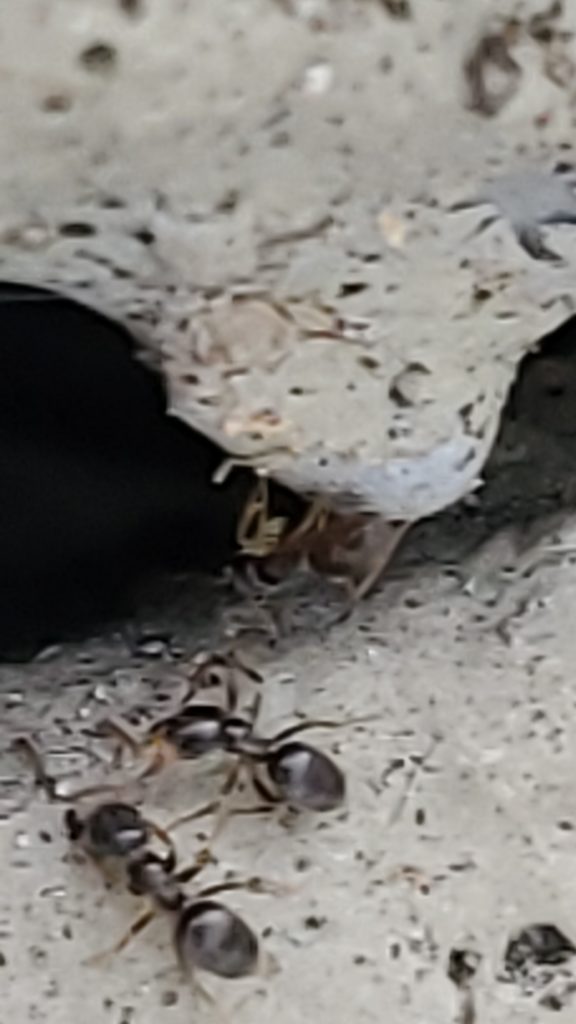
Carpenter ants and sugar ants are two of the most common invaders in Shoreline.
Termites silently destroy wood structures, leading to thousands of dollars in damage if left untreated.
Wasps, hornets, and bees pose a serious threat to outdoor safety, especially in residential areas and commercial properties.
Cockroaches are resilient pests that multiply rapidly, contaminating surfaces and spreading bacteria.
While most spiders in Shoreline are harmless, some, like the black widow, pose health risks
Q: Why do I keep getting rats even after treatment in Shoreline? A: Recurring rat problems in Shoreline almost always mean an unsealed entry point is still open, or a new population is moving in through the drainage or sewer system along the property line. A treatment without exclusion only removes the current population. AMPM Exterminators performs entry point audits as part of every rat job call (206) 571 7580.
Q: Do I need a Structural Pest Inspection (SPI) to buy a home in Shoreline? A: Most mortgage lenders in Washington State require an SPI (also called a WDO inspection) before closing. Even when not required, Shoreline’s older housing stock makes it strongly advisable. AMPM Exterminators provides written SPI reports accepted by lenders and escrow companies throughout King County. Call (206) 571 7580 to schedule before your closing deadline.
Q: Are there termites in Shoreline, WA? A: Yes. Subterranean termites are active throughout King County including Shoreline, particularly in older homes with wood-to-soil contact and properties near wetlands like Ronald Bog and Echo Lake. Pacific dampwood termites are also present where moisture damaged wood exists. Spring is the peak swarming season discarded wings on window sills are the most common first sign.
Q: What is the fastest way to get rid of ants in my Shoreline home? A: That depends on the species. Odorous house ants respond quickly to exterior barrier treatments and interior bait. Carpenter ants require locating and treating the colony inside the structure spray alone will not resolve it. AMPM Exterminators identifies the species first, then applies the right targeted treatment. Call (206) 571 7580 for same day service.
Q: Does Shoreline require pest control documentation for commercial properties? A: King County health regulations require food handling businesses to maintain active, documented pest management programs. AMPM Exterminators provides monthly commercial programs with written service logs and compliance documentation suitable for King County health inspectors. Call (206) 571 7580.
Q: Why are there so many spiders in my Shoreline garage in the fall? A: Late August through October is spider mating season in Western Washington. Male spiders leave their webs looking for mates and commonly enter garages through gap seals at the bottom of the door. The Interurban Trail and park greenbelts near Shoreline also drive higher-than-average insect density, which feeds larger spider populations around nearby homes. A perimeter treatment in late summer addresses both spiders and the insect prey attracting them.
Q: What neighborhoods in Shoreline have the worst pest problems? A: Based on service history, properties near Ronald Bog and Twin Ponds see the highest ant and rodent pressure due to sustained soil moisture. Ridgecrest and North City have the highest rate of roof rat calls in older attics. Ballinger and Echo Lake see the most termite and dampwood fungus findings due to wetland proximity. AMPM Exterminators tailors treatment to your specific neighborhood conditions call (206) 571 7580.
Q: How do I know if I have wasps inside my walls in Shoreline? A: The clearest sign is a steady stream of wasps entering and exiting a small gap in your siding, soffit, or foundation especially in the same spot repeatedly. You may also hear a faint buzzing or papery crackling inside the wall when you press your ear against it. Do not seal the gap or spray into it this is one of the most dangerous DIY mistakes with yellow jackets. Call AMPM Exterminators at (206) 571 7580 for safe removal.
Q: I saw one cockroach in my Shoreline home do I have an infestation? A: Possibly. Cockroaches are nocturnal and highly skilled at staying hidden. Seeing one during the day usually means the population is large enough that competition for harborage is pushing individuals into the open. A single cockroach spotted at night near a food or moisture source may be a scout from a small early-stage colony. Either way, the correct response is inspection not waiting to see if more appear. Call AMPM Exterminators at (206) 571-7580 for a same-day assessment.
Q: Can cockroaches come from my neighbor’s apartment into mine in Shoreline? A: Yes this is one of the most common cockroach scenarios in Shoreline’s multi-unit buildings. German cockroaches travel freely through shared plumbing walls, under door gaps, and through utility chases. Treating only your unit while adjacent units remain infested will not resolve the problem long term. AMPM Exterminators offers building wide programs coordinated through property managers that address the entire infestation, not just individual units.
Our technicians know Shoreline’s specific pest pressures from the drainage corridors near I-5 to the wetland edges at Ronald Bog, from the aging wood frames of North City to the mixed-use buildings in Town Center. Whether you need a rat abatement program, a Structural Pest Inspection (SPI) for a real estate transaction, spider control, or a commercial compliance program, call us at (206) 571-7580, 7 days a week, same day service available.
AMPM Exterminators serves Shoreline, North City, Ridgecrest, Meridian Park, Ballinger, Echo Lake, Lake Forest Park, Kenmore, and all of King County, WA.
Your home’s location dictates its primary pest threats. We provide neighborhood specific strategies.
| Shoreline Neighborhood | Common Pest Pressures | Our Hyper-Local Strategy |
|---|---|---|
| Richmond Beach, Saltwater Park Areas | Moisture ants, carpenter ants, rodents from greenbelts, wildlife (raccoons). | Foundation moisture control, wildlife-proof exclusion focusing on attic vents & rooflines, rodent baiting stations. |
| Parkwood, North City | Rodents (mice, rats), ants, spiders due to proximity to parks and older sewer lines. | Interior exclusion sealing, perimeter insecticide barriers, and sewer line inspections for rodent entry. |
| Aurora Square, Meridian Park | Ants, occasional rodents from commercial spillover, occasional cockroaches. | Focused exterior barrier treatments and monitoring for commercial-to-residential pest migration. |
| Echo Lake, Hillwood | Mosquitoes, drain flies, subterranean termites due to wetland proximity. | Mosquito management programs, termite soil treatments, and drainage solutions. |
Protect your home or business from pests in Shoreline! Contact us now for a FREE pest inspection and receive a customized pest control plan.
We are here to help you 7 days a week and respond within 24 hours. Plus, you can find most answers to your questions right on FAQ page.