
Most Seattle homeowners panic when they see ants. But if those ants are moisture ants, panic isn’t the right response immediate action is.
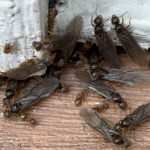
Moisture ants don’t just indicate you have an ant problem. They’re telling you that somewhere in your home, wood is actively rotting. Water is accumulating where it shouldn’t. Structural damage is happening right now, this moment, while you’re reading this.
A Ballard homeowner ignored moisture ants in their bathroom for six months. When we arrived, we found $15,000 in water damage behind the wall rotted studs, soaked insulation, active mold growth, and a slow leak from a shower pan that had been dripping for over a year. The ants appeared three months before major damage occurred. They were the early warning system.
Here’s what you need to understand: Moisture ants only nest in wood with 15%+ moisture content. Healthy, dry wood in Seattle averages 8-12% moisture. If moisture ants are nesting in your walls, you have active water intrusion that will cause thousands in damage if not addressed immediately.
After 20+ years eliminating moisture ant colonies throughout Seattle and King County, we’ve learned to treat them as diagnostic tools not just pests. Where moisture ants nest tells us exactly where water damage is occurring.
AMPM Exterminators provides moisture ant elimination combined with moisture inspection to identify and stop the water source before structural damage becomes catastrophic.
Call (206) 571-7580 for same-day moisture ant inspection and water damage assessment
Licensed specialists | 20+ years King County | Free moisture inspection with treatment | Contractor referrals for repairs
What Moisture Ants Look Like (And Why They’re Easy to Identify)
Good news: Moisture ants are one of the easiest ant species to identify visually. You don’t need a magnifying glass or advanced knowledge.
Size:
- Tiny: 1/16 inch (1.5mm)
- About half the size of carpenter ants
- Similar size to odorous house ants
- Smaller than a grain of rice
Color:
- Yellow to golden brown
- Almost translucent appearance (you can see through them slightly)
- Light tan to honey colored
- Never jet black (that’s odorous house ants or carpenter ants)
Body characteristics:
- Uniform light coloring throughout
- Shiny, almost waxy appearance
- No distinct color variation between head/thorax/abdomen
- Single node (bump) between thorax and abdomen
Behavior:
- Move slower than other ant species
- Create visible dirt/mud structures (carton nests)
- Often seen near moisture sources (bathrooms, kitchens, basements)
- Swarm in spring/early summer (winged reproductives)
The carton nest (their signature):
This is the dead giveaway. Moisture ants build visible structures made of:
- Chewed wood fibers
- Soil particles
- Saliva
- Looks like dried mud or paper mache
- Brown, tan, or grayish color
- Found along baseboards, inside walls, in crawl spaces
If you see tan/brown mud like structures near where you see ants, you have moisture ants. Guaranteed.
Where you’ll find them:
Bathrooms (60% of indoor colonies):
- Behind toilet base
- Under bathtub
- Shower wall cavities
- Around sink plumbing
- Behind tile (especially on exterior walls)
Kitchens (25%):
- Under sink cabinet
- Behind dishwasher
- Around refrigerator water line
- Beneath flooring near sink
Basements/Crawl Spaces (40%):
- Damp wood beams
- Rotting sill plates
- Moisture damaged subflooring
- Around foundation cracks with seepage
Attics (15%):
- Roof leak areas
- Around chimneys with flashing failure
- Condensation damaged insulation areas
Exterior (90% of colonies):
- Rotting fence posts
- Old stumps
- Firewood piles touching ground
- Landscape timber with soil contact
- Under porch/deck with moisture issues
Why Seattle Has Massive Moisture Ant Populations
If you’re wondering why moisture ants seem to be everywhere in the Pacific Northwest, the answer is simple: Seattle provides ideal conditions year-round.
Factor #1: Constant Precipitation
Seattle averages:
- 150+ rainy days annually
- 38 inches annual rainfall
- 70%+ average humidity
- Frequent drizzle (keeps everything damp)
Result: Wood stays consistently moist, creating unlimited nesting opportunities.
Factor #2: Wood Construction
Pacific Northwest building practices:
- Wood-frame construction standard
- Cedar siding common (decays easily when damp)
- Wood deck structures (often in contact with soil)
- Older homes (pre1980) lack vapor barriers
Result: Thousands of homes have wood members with elevated moisture content.
Factor #3: Poor Drainage
Seattle homes often have:
- Gutters that overflow (heavy rain)
- Downspouts dumping near foundation
- Poor grading (water flows toward house)
- Clay soil (doesn’t drain well)
Result: Foundation areas stay wet, wood sill plates absorb moisture.
Factor #4: Landscaping Against Siding
Common Seattle landscape mistakes:
- Bark mulch piled against siding
- Flower beds touching foundation
- Ivy/groundcover climbing walls
- Drip irrigation soaking siding
Result: Siding stays damp, moisture penetrates to wall studs.
Factor #5: Aging Infrastructure
Seattle’s housing stock:
- 30% of homes built before 1960
- Deteriorating plumbing systems
- Original roofs past lifespan
- Settling foundations creating cracks
Result: Slow leaks develop, moisture accumulates unnoticed.
Seattle neighborhood moisture ant hot spots:
Older Seattle (Queen Anne, Capitol Hill, Ballard, Wallingford):
- Pre-1960 homes with settling foundations
- Original plumbing developing pinhole leaks
- Siding/foundation gaps from settling
- Poor original drainage design
Rainier Valley/South Seattle:
- Higher clay soil content (drainage problems)
- Older homes with delayed maintenance
- Foundation settling on hillsides
West Seattle:
- Proximity to water (higher ambient humidity)
- Marine climate keeps wood damp
- Older housing stock
Eastside (Bellevue, Redmond, Sammamish):
- Newer construction but irrigation overuse
- Landscape drainage directing water to foundations
- Deck/fence structures with soil contact
The Water Damage Timeline: What Moisture Ants Are Telling You
Moisture ants don’t appear randomly. They follow a predictable timeline that corresponds directly to wood moisture levels and rot progression.
Understanding this timeline helps you know how urgent action is:
Week 1-4: Water Intrusion Begins
- Leak develops (plumbing, roof, foundation)
- OR drainage problem created (landscaping change, gutter failure)
- Wood begins absorbing moisture
- Moisture content rises from 8-12% (normal) toward 15%
- No visible signs yet
- No ants yet
Week 5-8: Wood Reaches Critical Moisture
- Wood moisture content hits 15%+
- Conditions now suitable for moisture ant nesting
- Fungal spores begin germinating (pre rot stage)
- Still no visible damage
- Moisture ants scouts begin exploring area
Week 9-12: First Moisture Ant Activity
- Scout ants find moisture-damaged wood
- Colony begins establishing nest in damp wood
- Carton nest construction starts
- THIS IS WHEN YOU FIRST SEE ANTS
- Wood still structurally sound but moisture content rising
Months 4-6: Established Colony & Early Rot
- Moisture ant colony fully established
- Hundreds to thousands of workers
- Wood moisture content 18-25%
- White rot or brown rot begins
- Wood softening (early structural compromise)
- Ants highly visible, may see swarmers in spring
Months 7-12: Significant Structural Damage
- Advanced wood rot
- Studs/joists losing strength
- Mold growth likely in wall cavities
- Insulation saturated
- Repair costs: $2,000-8,000
- Ants everywhere in affected area
Year 2+: Catastrophic Damage
- Structural members failing
- Wall/ceiling collapse risk
- Extensive mold remediation needed
- Subfloor replacement required
- Potential foundation damage
- Repair costs: $10,000-50,000+
- Massive ant colonies, multiple carton nests
The Ballard bathroom case (real example):
Month 1-3: Shower pan develops slow leak (unnoticed)
Month 4: Moisture ants appear near baseboard
Month 5-6: Homeowner ignores ants, tries DIY spray
Month 7: We’re called when floor feels “spongy”
Discovery:
- 3 rotted wall studs
- Soaked insulation
- Active mold growth (200+ sq ft)
- Subfloor delaminating
- Damage: $15,000 repair
- Ants detected at Month 4 if addressed then: $300 ant treatment & $500-800 shower pan repair leads to $1,300 total
Ignoring moisture ants for 6 months cost $13,700 extra.
Where to Look for Moisture Ant Nests (And What You’ll Find)
Finding moisture ant nests tells you exactly where water damage is occurring. Here’s how to conduct your own preliminary inspection:
Indoor inspection priorities:
Bathrooms (check these first):
Behind toilet:
- Remove toilet (or just look behind base)
- Check floor for soft spots, discoloration
- Look for carton nests at baseboard/floor junction
- Feel for moisture in drywall
Bathtub/shower:
- Check tile grout for cracks, missing sections
- Press on tile does it move? (indicates water behind)
- Look for ants emerging from tub drain area
- Check ceiling below (if multistory)
Sink area:
- Open cabinet, check back wall and floor
- Look for water stains, warping
- Check for carton nests in cabinet corners
- Run water, watch for drips
Kitchen:
Under sink:
- Check for drips from P trap, supply lines
- Look for soft/warped cabinet bottom
- Water stains on back wall
- Carton nests
Dishwasher:
- Pull dishwasher out (or just check around it)
- Look for ants emerging around base
- Check floor for soft spots
- Common leak point: supply line connection
Laundry room:
Washing machine:
- Check drain hose connection
- Look behind/under machine
- Floor staining, soft spots
- Ants near drain or supply lines
Basement/crawl space:
Sill plates (wood on top of foundation):
- Should feel solid and dry
- If soft/spongy leads to moisture damage
- Carton nests indicate active moisture
Floor joists:
- Look for dark staining (water damage)
- White/brown fuzzy growth (rot)
- Soft wood when probed with screwdriver
Exterior inspection:
Foundation perimeter:
- Walk entire perimeter
- Look for carton nests at foundation/soil junction
- Check sill plate area (where house meets foundation)
- Probe wood with screwdriver should be hard
Deck/porch posts:
- Check posts in contact with ground/concrete
- Probe base with screwdriver
- Dark staining indicates moisture
Fence posts:
- Posts in ground are prime nesting sites
- Look for carton nests at soil line
- Soft wood leads to moisture damage & rot
The screwdriver test:
Push a flathead screwdriver into suspect wood:
- Should be difficult, wood is hard
- If screwdriver sinks in easily leads to rot
- If wood is spongy/soft leads to active moisture damage
- If you find easy-penetration wood & moisture ants leads to you found the problem
Professional Moisture Ant Elimination & Moisture Inspection
Effective moisture ant treatment requires two simultaneous actions: eliminate the ants AND stop the water source. One without the other is pointless.
Phase 1: Comprehensive Inspection (Day 1)
Moisture ant colony location:
- Identify all visible carton nests
- Trace ant trails to source
- Check common moisture problem areas
- Document colony locations
Moisture source identification:
- Moisture meter readings in affected areas
- Check all plumbing in vicinity
- Inspect roof/gutters if attic involvement
- Foundation inspection for seepage
- Identify landscape/drainage issues
Damage assessment:
- Probe wood for rot with moisture meter & screwdriver
- Document structural compromise
- Estimate repair scope needed
- Prioritize urgency (cosmetic vs. structural)
Written report provided:
- Moisture ant colony locations
- Water source identified (or probable cause)
- Moisture meter readings
- Wood damage assessment
- Treatment plan
- Repair recommendations
Phase 2: Ant Colony Elimination (Days 1-10)
Direct nest treatment:
- Apply non repellent insecticide to carton nests
- Treat wall voids if interior colony
- Exterior perimeter treatment
- Bait stations at foraging trails
Timeline:
- Days 1-3: High activity as colony is affected
- Days 4-7: Activity declining
- Days 8-10: Minimal to no ant sightings
- Follow up: Day 14 to verify elimination
Phase 3: Moisture Problem Resolution (Concurrent)
This is NOT included in ant treatment but is required for permanent solution:
Plumbing repairs (if leak identified):
- We provide contractor referrals
- OR you hire your own plumber
- Common fixes: Replace supply lines, reseat toilet, shower pan repair
Drainage corrections (if water intrusion):
- Gutter cleaning/repair
- Downspout extension
- Foundation grading improvement
- French drain installation (severe cases)
Structural drying:
- May require professional drying service
- Remove/replace insulation if saturated
- Ensure wood moisture content drops below 15%
Wood repair/replacement (if rotted):
- Carpenter referral provided
- Replace rotted studs, joists, sill plates
- Treat remaining wood with borate
Phase 4: Prevention & Monitoring (Ongoing)
Immediate prevention:
- Fix identified moisture source
- Allow wood to dry (may take weeks)
- Recheck moisture levels
Long-term monitoring:
- Quarterly moisture checks in affected areas
- Annual crawl space inspection
- Address any new leaks immediately
- Maintain gutters, drainage
Re-infestation prevention:
- Moisture ants will return if moisture returns
- Keep wood moisture content below 15%
- Fix leaks within days, not weeks
- Regular maintenance prevents problems
Cost Transparency: Moisture Ants & Moisture Damage
Ant treatment costs (professional):
Standard moisture ant elimination:
- Cost: $200-350
- Includes: Inspection, moisture assessment, colony treatment, perimeter application
- Timeline: 10-14 days for elimination
- Follow up: One included visit
Severe infestation (multiple colonies, large carton nests):
- Cost: $250-350
- Includes: Extensive treatment, multiple applications, aggressive program
- Timeline: 14-21 days
- Follow up: Two included visits
What’s included:
- Professional moisture ant identification
- Moisture meter inspection (free with treatment)
- Water source identification
- Colony elimination
- Perimeter barrier treatment
- Written moisture/damage assessment
- Contractor referrals for repairs
- 30 day warranty on ant elimination
- Prevention recommendations
What’s NOT included (but required for permanent solution):
Plumbing repairs:
- Toilet re-seat: $150-250
- Supply line replacement: $100-200
- Shower pan repair: $500-1,500
- Repipe section: $400-1,000+
Drainage/gutter work:
- Gutter cleaning: $100-200
- Downspout extension: $50-150
- Grading correction: $500-2,000
- French drain: $2,000-5,000
Structural repairs:
- Replace 2-3 studs: $400-800
- Subfloor replacement (small area): $600-1,200
- Sill plate section: $800-1,500
- Extensive rot damage: $5,000-20,000+
Drying/mold remediation:
- Professional drying service: $500-2,000
- Mold remediation: $1,500-5,000+
- Insulation replacement: $400-1,200
Total cost examples (real cases):
Minor case (caught early):
- Moisture ants: $350
- Leaky toilet flange: $200
- Total: $550
- Timeline: 2 weeks
Moderate case (6 months ignored):
- Moisture ants: $400
- Shower pan repair: $1,200
- Replace 2 studs: $600
- Total: $2,200
- Timeline: 1 month
Severe case (1+ year ignored):
- Moisture ants: $500
- Bathroom subfloor: $3,500
- Mold remediation: $2,800
- Replace 6 studs: $1,800
- Tile/drywall restoration: $4,500
- Total: $13,100
- Timeline: 6-8 weeks
The math is brutal: Every month you ignore moisture ants costs an average of $1,000-2,000 in additional damage.
DIY ant treatment without fixing moisture source:
- Store spray: $15-30
- Temporary ant reduction
- Moisture problem continues
- Damage compounds monthly
- Eventually call professional anyway
- Wasted time: 3-12 months
- Extra damage cost: $3,000-15,000+
Frequently Asked Questions: Moisture Ants in Seattle
Q: How can I tell if I have moisture ants or a different species?
A: Moisture ants are yellow to golden-brown (never jet black), tiny (1/16 inch), and most importantly they build visible carton nests that look like dried mud or paper mache. If you see tan/brown mud like structures along baseboards or in crawl spaces light colored small ants, you have moisture ants. Other identifying factors: They’re only found near moisture sources (bathrooms, under sinks, damp basements), they move slower than other ants, and they swarm in spring with winged reproductives. If ants are jet black with coconut smell when crushed, those are odorous house ants. If ants are large (pencil eraser size) and black, those are carpenter ants.
Q: Are moisture ants the same as carpenter ants?
A: No, they’re completely different species with different behavior. Carpenter ants are large (1/4 to 1/2 inch), jet black or red-and-black, and excavate dry sound wood to create galleries. Moisture ants are tiny (1/16 inch), yellow-tan colored, and only nest in wood with 15%+ moisture content that’s already rotting. Both indicate problems, but different ones: Carpenter ants indicate structural wood they can excavate (may or may not have moisture issues). Moisture ants indicate active water damage and rot. Moisture ants are actually the more urgent warning because they signal ongoing water intrusion that’s causing thousands in damage.
Q: Will moisture ants damage my house?
A: Moisture ants themselves cause minimal direct damage they don’t excavate wood like carpenter ants. However, they’re an indicator of massive damage happening from water and rot. The water problem causing them to nest there is destroying your home’s structure. Moisture ants only nest where wood moisture content exceeds 15% (healthy wood is 8-12%). That elevated moisture causes rot, which costs thousands to repair. A moisture ant colony isn’t the problem it’s the symptom. The actual problem is the water leak, poor drainage, or other moisture source that will cost $5,000-50,000 in structural repairs if not addressed. Think of moisture ants as a free home inspection alarm system telling you to fix something immediately.
Q: Can I get rid of moisture ants without fixing the moisture problem?
A: You can kill the current colony with spray or bait, but new moisture ants will recolonize within weeks to months as long as moisture remains. Moisture ants are attracted to wood with 15%+ moisture content if that condition exists, they will return. Professional treatment eliminates the current colony in 10-14 days, but permanent elimination requires: Fix the water source (leak, drainage, etc.), allow wood to dry below 15% moisture, replace any rotted wood. If you only treat ants without fixing moisture, you’ll have ants again within 2-6 months, and the water damage will continue costing thousands. Smart approach: Treat ants immediately to stop the visible problem, then fix moisture source within 2-4 weeks for permanent solution.
Q: How long does it take to eliminate moisture ants?
A: Professional treatment eliminates the active colony in 10-14 days. Timeline: Days 1-3 high activity as colony consumes treatment product, Days 4-7 declining ant sightings, Days 8-10 minimal activity, Days 11-14 no ants, elimination confirmed. However, permanent elimination requires fixing the underlying moisture problem. If you only treat ants but don’t fix the water source, new colonies will establish within 2-6 months. Complete solution timeline: Ant elimination 10-14 days, plus moisture source repair (1 day to 4 weeks depending on issue), plus wood drying time (2-8 weeks depending on extent).
Q: What attracts moisture ants to my house?
A: Moisture ants are attracted by one thing: wood with elevated moisture content (15% or higher). They’re not attracted to food like other ants they feed on honeydew from aphids and scale insects outdoors, or on fungus growing in damp wood. If you have moisture ants, you have a water problem: plumbing leaks (toilets, supply lines, shower pans, pipes), roof leaks, poor drainage directing water to foundation, gutter problems causing wood to stay wet, landscape/irrigation soaking siding, basement/crawl space moisture, condensation in wall cavities. The ants don’t cause the moisture they find it and nest there because rotting wood is their preferred habitat. Finding moisture ants means water is accumulating somewhere and causing damage right now.
Q: Do moisture ants bite or sting?
A: No. Moisture ants are completely harmless to humans they don’t bite, sting, or pose health risks. They don’t contaminate food because they don’t forage for human food (they feed on honeydew and fungus). The danger from moisture ants is entirely indirect: they indicate structural damage from water and rot. The urgency isn’t about the ants themselves it’s about the thousands of dollars in water damage they’re warning you about. A Ballard homeowner who ignored moisture ants for 6 months ended up with $15,000 in bathroom repairs. The ants were harmless; the water leak they indicated destroyed three wall studs, the subfloor, and created extensive mold.
Free Moisture Ant Inspection Moisture Assessment
If you see moisture ants anywhere in or around your home, you need to know where water is accumulating NOW before damage becomes catastrophic.
We provide free moisture assessment with every moisture ant treatment:
What’s included at no charge:
- Species confirmation (verify they’re moisture ants)
- Moisture meter readings in affected areas
- Identify probable water source
- Assess extent of visible damage
- Written report with recommendations
- Contractor referrals if repairs needed
- Honest assessment of urgency
Three ways to schedule:
Option 1: Phone
- Call: (206) 571-7580
- Same-day appointments available
- Evenings and weekends accommodated
Option 2: Text
- Text photo of ants to: (206) 571-7580
- Include location found (bathroom, basement, etc.)
- We confirm species and schedule inspection
Option 3: Online
- Request inspection: ampmexterminators.com
- We call within 2 hours during business hours
- Schedule at your convenience
What to expect during inspection:
Time required: 30-45 minutes
Inspector will:
- Identify ant species (confirm moisture ants)
- Use moisture meter to check wood/drywall
- Locate carton nests
- Check plumbing in affected areas
- Inspect exterior drainage/gutters if relevant
- Probe suspect wood for rot
- Take photos for documentation
You receive:
- Written inspection report
- Moisture meter readings
- Identified water source (or most likely cause)
- Treatment recommendation and cost
- Repair scope and estimated costs
- Contractor referrals (plumbers, carpenters, remediation)
- No-pressure decision: Treat now or get other quotes
We’d rather you understand the urgency and make informed decisions than guess and waste months while damage compounds.
Schedule Your Moisture Ant Inspection & Elimination
Moisture ants are your home’s alarm system. Don’t ignore the alarm.
Call AMPM Exterminators: (206) 571-7580
Or text ant photos to: (206) 571-7580
Or request inspection online: ampmexterminators.com
Serving all King County communities:
Seattle (all neighborhoods), Bellevue, Kirkland, Redmond, Sammamish, Issaquah, Mercer Island, Bothell, Woodinville, Newcastle, Renton, Kent, Federal Way, Auburn, Tukwila, Burien, SeaTac, Shoreline, Lake Forest Park, Kenmore
Available 7 days/week:
- Regular hours: Monday-Saturday 8 AM-6 PM, Sunday 9 AM-5 PM
- Emergency service available for severe infestations
Why choose AMPM Exterminators:
- 20 years moisture ant experience in King County
- Free moisture inspection with treatment
- Licensed moisture meter operation
- Identify water source, not just treat ants
- Contractor referral network for repairs
- Transparent pricing, no hidden fees
- Same day service available
- 30 day ant elimination warranty
Every day you wait costs an average $50-100 in additional structural damage. Schedule inspection this week.
Related Ant Control & Moisture Services
Seattle Ant Control (All Species)
Comprehensive guide to all ant species in Seattle with species-specific identification and elimination.
Carpenter Ant Extermination
Large black ants excavating wood different from moisture ants but often confused. Requires structural inspection.
Odorous House Ants Control
Small black ants attracted to sweets most common Seattle ant but different from moisture ants. Uses different treatment.
Building Pest Inspections
Comprehensive pest and moisture inspections for real estate transactions, prepurchase assessments.
Commercial Pest Control
Moisture ant issues in commercial buildings, multifamily properties, restaurants with ongoing moisture management.