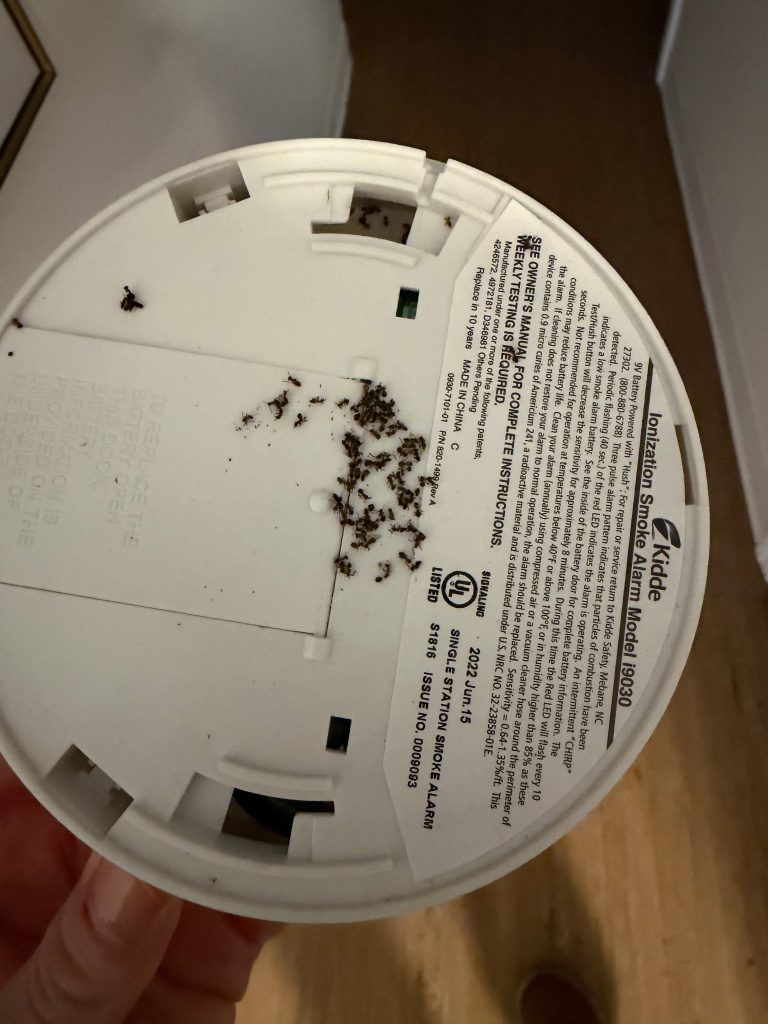
Ants Coming Out of Walls, Outlets, and Baseboards in Seattle Homes and Businesses
If you are seeing ants coming out of walls, electrical outlets, or baseboards, this usually means the colony is already inside the structure.
This is one of the most common calls for a professional pest control service in Seattle and King County.
Both homeowners and commercial buildings experience this issue, especially with tiny black ants, carpenter ants, and moisture ants.
Seattle ants exterminators in the wall
Why Are Ants Coming Out of My Walls?
Ants only come out of walls when they are nesting inside.
This is not a surface problem it is a structural pest issue that requires proper exterminator treatment.
Common causes include:
Colonies living inside wall voids
Ants trapped indoors after sealing entry points
Moisture damaged wood attracting nesting ants
Expanding colonies spreading through walls
If ants are emerging from outlets or switches, the nest is usually deep inside the wall.
Signs You Need an Ant Control Service
You may need a professional ant control service if:
Ants appear from outlets, baseboards, or light switches
Ants show up in bedrooms, bathrooms, or offices
Cleaning does not reduce activity
You see ants daily in the same location
The problem spreads to multiple rooms
These are clear signs of a hidden infestation that DIY methods cannot resolve.
Common Ants Found in Walls in Seattle
Tiny Small Black Sugar Ants (Odorous House Ants)
These are the most common ants treated by pest control services in Seattle.
Very small black ants in kitchens, bathrooms, and walls
Large colonies with multiple queens
Often spread when sprayed incorrectly
These ants are a top reason homeowners search for exterminators.
Carpenter Ants (Structural Pest Control Issue)
Carpenter ants are larger and require specialized exterminator treatment.
Large black ants active at night
Nest inside wood structures
Can cause structural damage over time
This is one of the most serious pest control problems in Seattle homes.
Moisture Ants (Moisture and Water Damage Indicator)
Moisture ants are often linked to hidden leaks.
Found in damp walls or rotting wood
Common in bathrooms, basements, and crawl spaces
This type of infestation often overlaps with moisture control and home repair issues.
Why Ants in Walls Require Professional Pest Control
Ant infestations inside walls are difficult to eliminate because:
Colonies are hidden behind drywall
Standard sprays do not reach the nest
Ants can spread into multiple wall cavities
The visible ants are only a small portion of the colony
This is why pest control services use specialized treatment methods.
How Professional Exterminators Get Rid of Ants in Walls
A licensed exterminator or pest control service will typically:
Inspect the property to locate the colony
Identify the ant species
Treat wall voids where ants are nesting
Use non repellent bait systems
Apply exterior pest control barriers
Address moisture or structural issues if needed
This process eliminates the colony instead of just the visible ants.
Residential and Commercial Ant Control Services
Ant infestations in walls affect both homes and businesses.
Residential Pest Control
Homeowners often experience:
Tiny ants in kitchens and bathrooms
Ants spreading from walls into living areas
Recurring infestations after DIY treatments
Commercial Pest Control Service
Businesses frequently deal with:
Ants in office walls and break rooms
Restaurant and food service infestations
Warehouses and multiunit buildings
Commercial pest control requires ongoing monitoring and prevention to meet health and safety standards.
Why DIY Ant Treatments Often Fail
Store-bought products are not designed for wall infestations.
Common issues include:
Sprays only kill visible ants
Colonies remain hidden and active
Some treatments cause colonies to spread
Entry points are sealed before elimination
This often leads to a larger and more expensive problem later.
Free inspection. No hidden fees. No contracts ever.
Frequently Asked Questions Ants in Walls Seattle
Q: How do I know if ants are nesting in my walls or just coming in from outside? A: Ants nesting inside walls emerge from electrical outlets, light switches, and baseboards with no visible cracks not from obvious entry points like doors or windows. If ants appear in rooms with no food source such as bedrooms, bathroom, or closets, they are nesting inside. If you see winged swarmers emerging from walls in spring, you have an established indoor colony at least 3 years old. Outdoor foragers leave trails you can follow to an entry point. Indoor wall nesters simply appear from walls with no trail leading anywhere visible.
Q: What are the tiny small little black sugar ants coming out of my outlets in Seattle? A: In Seattle and King County, tiny black ants emerging from electrical outlets are almost always odorous house ants Tapinoma sessile. They measure 1.5 to 2mm and smell like rotten coconut when crushed. They are nesting in your wall void, most likely because entry points were sealed while foraging workers were still inside, trapping them and forcing colony establishment indoors. Professional wall void treatment eliminates the satellite colony within 7 to 10 days. Call AMPM Exterminators at (206) 571 7580 for same day service.
Q: Does spraying ants coming out of outlets make the problem worse? A: Yes. Spraying outlets with consumer ant spray kills the ants you can see but triggers colony budding the survival response where odorous house ant colonies split into multiple new satellite nests in other wall voids. One spray application can turn a single wall void colony into three or four colonies emerging from different locations throughout your home. Professional non-repellent bait and dust treatment eliminates the entire colony without triggering budding.
Q: Will sealing my electrical outlets stop ants from coming out? A: No and sealing outlets before eliminating the colony makes the situation significantly worse. The colony is still alive inside the wall. Sealing one exit forces ants to chew new exits in other locations spreading emergence points from one outlet to five or six baseboards, outlets, and ceiling fixtures. The correct sequence is always: eliminate colony first with professional wall void treatment, wait 7 to 10 days to confirm complete elimination, then seal to prevent future colonies.
Q: Do I need to open my walls to treat ants? A: In 95% of cases, no. Professional wall void treatment uses small drill holes of 1/8 to 1/4 inch to inject insecticidal dust. These holes are easily patched. Opening walls is only recommended when carpenter ant structural damage is so extensive that direct assessment of load-bearing members is needed, or when moisture damage requires wood replacement regardless of the ant treatment.
Q: How much does it cost to treat ants in walls in Seattle? A: Standard ants in walls elimination by AMPM Exterminators costs $200 to $300 and includes inspection, species identification, wall void dust treatment, exterior treatment, moisture assessment, and a follow up visit. Carpenter ant cases with structural concern run $300 to $600. Structural repairs, if needed, are quoted separately minor repairs $200 to $500, moderate $800 to $1,500. Free inspection with transparent upfront pricing. No contracts.
Q: How long does it take to eliminate ants nesting in walls? A: Professional wall void dust treatment eliminates most colonies within 7 to 14 days. Days 1 to 5 you may see increased ant activity as ants contact the dust and disperse it through the nest. Days 6 to 10 activity declines significantly. Days 11 to 14 activity stops and elimination is confirmed at the follow up visit. DIY surface spraying never reaches the wall void nest homeowners commonly spend 3 to 6 months spraying surfaces before calling a professional, during which time carpenter ant damage continues accumulating.
Q: Why do I have ants in my bedroom walls if my kitchen is clean? A: Ants in bedroom walls with no nearby food source is one of the clearest signs of an indoor wall void colony rather than outdoor foragers. Odorous house ant satellite colonies and carpenter ant galleries are not driven by kitchen food they are established nesting sites. The workers you see are not foraging for food in the bedroom; they are emerging from a colony living inside that wall. Professional treatment of the wall void is the only solution.
Emergency Same-Day Ants in Walls Service All Seattle Neighborhoods & King County
AMPM Exterminators serves every Seattle neighborhood and King County community for same day ants in walls treatment:
Seattle Neighborhoods: Capitol Hill, Queen Anne, Ballard, Wallingford, Fremont, University District, Ravenna, Green Lake, Greenwood, Phinney Ridge, Magnolia, West Seattle, Beacon Hill, Columbia City, Rainier Valley, Eastlake, South Lake Union, First Hill, Madrona, Madison Park, Montlake, Laurelhurst, Sand Point, View Ridge, Wedgwood, Bryant
King County Cities: Bellevue, Kirkland, Redmond, Sammamish, Issaquah, Mercer Island, Bothell, Woodinville, Newcastle, Renton, Kent, Federal Way, Auburn, Tukwila, Burien, SeaTac, Shoreline, Lake Forest Park, Kenmore, Des Moines, Covington, Maple Valley, Black Diamond, Enumclaw
Warning: Large Black Ants in Your Seattle Home Could Mean Structural Damage. We Don’t Just Kill Carpenter Ants; We Find the Moisture Source That Attracted Them. At AMPM Exterminators, we specialize in forensic pest control that solves the root cause. Schedule a Free Carpenter Ant Inspection Today: (206) 571 7580 Are These Carpenter Ants? A Seattle Homeowner’s Identification Guide Correct identification is critical. Mistaking carpenter ants for other species can lead to ineffective treatment and ongoing damage. Trait Carpenter Ant Common Look-Alike (Moisture Ant) Size Large (1/4″ to 1/2″) Similar size Color Typically solid black, or red-black Yellowish to dark brown Waist Single, rounded node Varies Key Sign Frass: Piles of fine wood shavings mixed with dead insect parts, often found near baseboards or windowsills. Habitat: Found only in severely decayed, wet wood. Their presence is a major red flag for a moisture problem. Not sure what you’re dealing with? Our technicians are experts in Seattle ant identification. Call us at (206) 571 7580 for a definitive diagnosis. The Carpenter Ant Threat to Seattle Homes They Excavate Wood, They Don’t Eat It. Unlike termites, carpenter ants don’t consume wood for nutrition. Instead, they excavate smooth, clean galleries inside it to build their nests. This tunneling weakens structural timbers, window frames, roof eaves, and decks from the inside out, often with little visible damage until it’s significant. Why Your Seattle Home is a Prime Target Our local climate and architecture create the perfect storm: If you suspect moisture issues, our moisture and pest damage inspections are designed to find the source. Our 3 Step Carpenter Ant Elimination Process for Seattle Homes We don’t just spray. We perform colony level surgery to eliminate the threat and prevent its return. Step 1: The Forensic Moisture & Nest Hunt Our certified technician conducts a detective like inspection: Step 2: Targeted Nest Elimination Using professional grade methods unavailable to consumers: Step 3: Exclusion & Follow Up Protection Killing the colony is only half the job. We ensure long term protection by: Local Case Study: Carpenter Ant Removal in a Queen Anne Craftsman The Problem: A homeowner noticed small piles of “sawdust” (frass) in a second-floor bathroom and saw a few large black ants at night. Our Inspection: An AMPM Exterminators technician used a moisture meter on the exterior wall, discovering high dampness around a window. The trail led to a satellite nest inside the wall, originating from a parent colony in a rotting fence post in the backyard. The Solution: We treated the indoor nest directly, eradicated the outdoor colony, and sealed the entry point at the window frame. We also referred a contractor to repair the failed window seal the true moisture source. The Result: Complete elimination. The homeowner has been ant free for over two years and uses us for annual preventative maintenance. Carpenter Ant Control FAQ for Seattle Homeowners Q: I see big ants only in spring. Is it an issue? A: Yes! In Seattle, spring is swarmer (winged reproductive ant) season. Seeing swarmers indoors almost always means an established nest is inside your structure. This is a critical sign to call a pro immediately. Q: Can’t I just spray the ants I see with store bought spray? A: This is the #1 mistake. Spraying repellents scatters the colony, causing it to split and create multiple hidden satellite nests. This “bounce effect” makes the problem far worse and more expensive to fix. Learn more about why DIY fails. Q: Is carpenter ant damage covered by homeowners insurance? A: Typically, no. Most policies classify insect infestation as a maintenance issue, not sudden “damage.” The most cost-effective solution is early professional treatment to prevent extensive damage. View our transparent pricing guide. Q: How are you different from other Seattle exterminators? A: We specialize in forensic pest control. For carpenter ants, we don’t stop at killing the insects. We are trained to find and help you fix the moisture problem that attracted them, providing a permanent solution, not a temporary fix. This is part of our hyper localized process used across King County. Don’t Let Carpenter Ants Compromise Your Seattle Home’s Structure What starts as a few large black ants can become a costly structural repair. Trust the local experts who understand Seattle’s unique pest challenges. Call (206) 571 7580 now for your FREE Moisture & Carpenter Ant Inspection. We serve all Seattle neighborhoods, especially those with older homes in Queen Anne, Ballard, Capitol Hill, West Seattle, Fremont, and throughout King County, including the Eastside communities of Redmond, Bellevue, and Sammamish. For detailed information on Seattle’s unique carpenter ant threats, including treatment for neighborhoods like Queen Anne and Ballard, visit our dedicated page: Carpenter Ant Extermination in Seattle, WA. Same day and next day emergency service available. 100% guaranteed results.*CALL NOW: (206) 571-7580 or Request a Quote Online
Found tiny black ants trailing to your sugar bowl this morning? Before you grab that spray can, you need to know what you’re actually dealing with and why the treatment that works for other ants will make these multiply. What Seattle homeowners call “sugar ants” are almost always odorous house ants, and they’re the #1 most difficult ant to eliminate in the Pacific Northwest. They have a unique survival mechanism that causes them to split into multiple colonies when threatened. Spray them today, and you’ll have ants in three different rooms by next week. After eliminating thousands of odorous house ant infestations throughout Seattle and King County over 20 years, we’ve identified exactly why DIY treatment fails 92% of the time and what actually works. AMPM Exterminators specializes in colony-elimination treatment for odorous house ants throughout Seattle, Bellevue, Kirkland, Redmond, and all King County communities. Call (206) 571-7580 for same day odorous house ant identification and elimination Licensed specialists | 20+ years King County | Non repellent treatment protocols | Colony elimination guaranteed The 3 Second Test That Identifies Odorous House Ants with 100% Accuracy Forget trying to identify these ants by sight. There’s a much easier method that works every single time. The Smell Test: Catch one ant. Crush it between your fingers. Smell it. Smells like rotten coconut, blue cheese, or dirty socks? That’s an odorous house ant. Guaranteed. 100% certain. No strong smell? It’s a different species (likely carpenter ant, pavement ant, or moisture ant). Why this test is foolproof: Odorous house ants get their name from the distinctive odor they emit when threatened or crushed. They produce a chemical compound that smells exactly like spoiled coconut. No other ant species in Seattle produces this specific smell. This is your most reliable identification method. Faster than visual inspection. More accurate than size comparison. Easier than trying to follow them to their nest. If it smells like rotten coconut, you’re dealing with odorous house ants. Everything else you need to know follows from that single fact. Why Seattle Calls Them “Sugar Ants” And Why That Name Causes Problems Here’s the truth: “Sugar ants” isn’t a real species. It’s a catchall term people use for small ants attracted to sweets. When Seattle homeowners say “sugar ants,” they’re almost always talking about odorous house ants (scientific name: Tapinoma sessile). Why the confusion matters: When you Google “how to get rid of sugar ants,” you get generic advice that doesn’t account for odorous house ants’ unique biology. This advice often makes the problem catastrophically worse. The real sugar ant (Camponotus consobrinus) is native to Australia and doesn’t exist in Washington State. What we have in Seattle are odorous house ants that happen to love sugar. Other names you might hear: Little black ants (technically a different species, but often confused) Sweet ants Coconut ants (because of the smell) Stink ants Piss ants (crude but descriptive) For the rest of this guide, we’ll use the correct name: odorous house ants. Understanding what you’re actually dealing with is the first step to eliminating them permanently. What Odorous House Ants Look Like (Visual Identification) If you can’t or won’t do the smell test, here’s how to identify them visually: Size: Very small: 1/16 to 1/8 inch (1.5-3mm) About the size of a rice grain 5-10X smaller than carpenter ants Color: Dark brown to jet black Shiny appearance Uniform coloring (no red/brown variations) Body shape: Segmented body with distinct head, thorax, abdomen One node (bump) between thorax and abdomen Elbowed antennae Six legs Behavior: Move in organized trails (not scattered) Trails can contain hundreds to thousands of workers Very fast movement (quicker than carpenter ants) Erratic pattern when disturbed (scatter then regroup) Where you’ll see them: Kitchen locations (90% of indoor sightings): Organized trails along countertops Leading to sugar bowl, honey jar, syrup bottle Inside cupboards at cereal boxes, cracker packages Around pet food bowls (both wet and dry) Under sink near dishwasher Behind refrigerator at drip pan Bathroom locations (40% of infestations): Trails along baseboards Around bathroom sink Near toothpaste tubes (attracted to sweet flavoring) Shower/tub caulking gaps Living areas (30%): Around potted plants Near windows with condensation Along baseboards to water sources For more detailed guidance on ants in kitchen removal in Seattle, we’ve created specific protocols for food contamination prevention. Why Seattle Has the Perfect Climate for Odorous House Ants If you’re wondering why these ants are everywhere in Seattle, it’s not your imagination. The Pacific Northwest provides ideal conditions for odorous house ant colonies to thrive year-round. Factor #1: Constant MoistureOdorous house ants need consistent moisture to survive. Seattle’s 150 rainy days annually provide: Damp soil perfect for outdoor nesting Moisture in mulch, bark, and landscaping materials Consistent water sources near homes Reduced risk of colonies drying out Factor #2: Moderate TemperaturesSeattle’s mild climate (rarely below freezing, rarely above 90°F) means: No harsh winter die off of colonies Year round foraging activity Multiple reproductive cycles per year Colonies grow larger than in extreme climates Factor #3: Dense Urban DevelopmentSeattle’s housing patterns create: Unlimited nesting sites (every yard has mulch, rocks, or landscape timber) Close proximity between properties (colonies spread easily) Shared walls in apartments and condos (entire buildings become interconnected colonies) Continuous food sources (someone is always leaving crumbs somewhere) Factor #4: Landscaping PracticesPacific Northwest landscaping trends favor: Heavy bark mulch usage (ideal nesting material) Dense groundcover plantings (provides shade and moisture) River rock borders (perfect hiding spots) Drip irrigation systems (constant moisture near foundations) The result: A single property in Seattle can support 5-10 separate odorous house ant colonies simultaneously, each containing 100,000+ workers and dozens of queens. Seattle neighborhood hot spots: Downtown/Belltown/South Lake Union: Multi-unit buildings with shared walls Continuous bark mulch in landscaping Colonies spread through entire structures Eastside (Bellevue, Redmond, Sammamish): Newer developments with extensive mulch Modern siding systems with hidden gaps Lack of mature trees = warmer soil = more attractive Older Seattle neighborhoods (Queen Anne, Capitol Hill, Ballard): Foundation settling creates entry gaps Mature landscaping with established colonies
Professional Moisture Ant Control & Elimination in King County, WA Solving a Symptom of a Bigger Problem Moisture ants are a clear warning sign. They nest exclusively in damp, decaying wood, meaning their presence in your home or business almost always indicates a hidden moisture issue a leaky pipe, faulty roof flashing, or poor ventilation. At AMPM Exterminators, we don’t just eliminate the ants; we help you identify and address the underlying water problem to prevent recurrence and protect your property’s structure. See ants in damp areas? Call (206) 571 7580. It could save you from major repairs. Identification: Moisture Ants vs. Carpenter Ants These two wood nesting ants are often confused, but require different approaches. Trait Moisture Ants Carpenter Ants Nesting Preference Already soft, rotting wood. They won’t tunnel into sound, dry wood. Can tunnel into sound, dry wood (though they prefer it softened by moisture). Key Sign Swarmers (winged ants) are often yellow or light brown. The nest wood is visibly spongy and rotten. Frass: Sawdust-like material (wood shavings + insect parts) near nest sites. Primary Threat Indicates active water damage that can rot structural wood, attract other pests, and cause mold. Causes direct structural damage by excavating wood to create nesting galleries. Not sure which you have? Our experts provide accurate identification. Call (206) 571 7580. Our Integrated Moisture Ant & Moisture Control Process We combine pest control with forensic moisture detection for a complete solution. Step 1: Moisture Detection & Nest Location Our technicians act as detectives. We use moisture meters, thermal imaging cameras, and visual inspection to: Step 2: Targeted Nest Elimination & Moisture Remediation Plan Step 3: Exclusion, Repair & Follow Up Common Moisture Sources We Find in King County Homes A Service Critical for the Entire Pacific Northwest Our damp climate makes every home in King County a potential target. This service is essential for: For nonemergency service in your city, visit our local pages: Seattle | Bellevue | Redmond | Renton | Kent | Federal Way Eastside Moisture Ant Control Available Throughout King County: Sammamish | Issaquah | Mercer Island | Medina | Yarrow Point | Hunts Point | Clyde Hill Why Choose AMPM Exterminators for Moisture Ants? Contact Us for Expert Moisture Ant Control Stop water damage and the pests it attracts. Protect your investment with a comprehensive solution. (206) 571 7580 info@ampmexterminators.com Schedule Your Free Moisture & Pest Inspection